A harness can match a weight chart and still sit awkwardly on a particular dog. Chest shape, neck proportions, coat, movement, and the position of the straps all affect fit. The useful question is whether this design works on this animal during ordinary movement, with the adjustment and attachment method intended by the manufacturer.
Treat the first fitting as a quiet inspection at home. Keep the dog secure in a safe space and allow time to investigate the equipment. A harness should support safe handling without becoming a source of rubbing, restricted movement, or escape risk. No general fit guide can certify a product for every dog, so ask your veterinarian or an experienced qualified professional when health, mobility, or unusual proportions complicate the choice.
Read the design instructions first
Find the manufacturer's measuring points, adjustment guidance, and intended use. Different designs place straps and attachment points differently, so advice for one harness may not transfer neatly to another. Measure as directed while the dog stands comfortably. If the dog is between sizes, ask the manufacturer rather than automatically choosing the larger option.
Check how the harness is put on. A design that passes over the head may be difficult for a dog who dislikes that movement. Another may require lifting a leg, which can be uncomfortable for some animals. Look for an option that can be introduced calmly and used without forcing the dog's body through an awkward position.
Inspect buckles, stitching, webbing, and attachment hardware before fitting. Everything should close fully and move as intended. Remove packaging and dangling labels that could catch or be chewed. Keep the instructions available for anyone else who may walk the dog; unfamiliar equipment should not have to be deciphered beside a busy road.
Introduce handling separately from walking
Let the dog look at and sniff the harness in a calm room. Reward comfortable voluntary interest if suitable. Gradually introduce the necessary movements without immediately clipping everything closed. A brief easy session is more useful than holding the dog still until the whole fitting is completed.
If the dog backs away, freezes, growls, or repeatedly tries to escape, pause. Consider whether the equipment or handling is uncomfortable and seek help where needed. Do not use food to lure the dog into a position and then surprise them with restraint. Predictable handling makes it easier to recognise genuine willingness.
Keep the session away from other animals and busy household activity. An animal may cope with a familiar person touching a strap but struggle when someone else leans over them. Ask caregivers to use the same gradual approach. If a harness is urgently needed for safe outings, discuss practical alternatives and a fitting plan with an appropriate professional.
Inspect contact points while standing
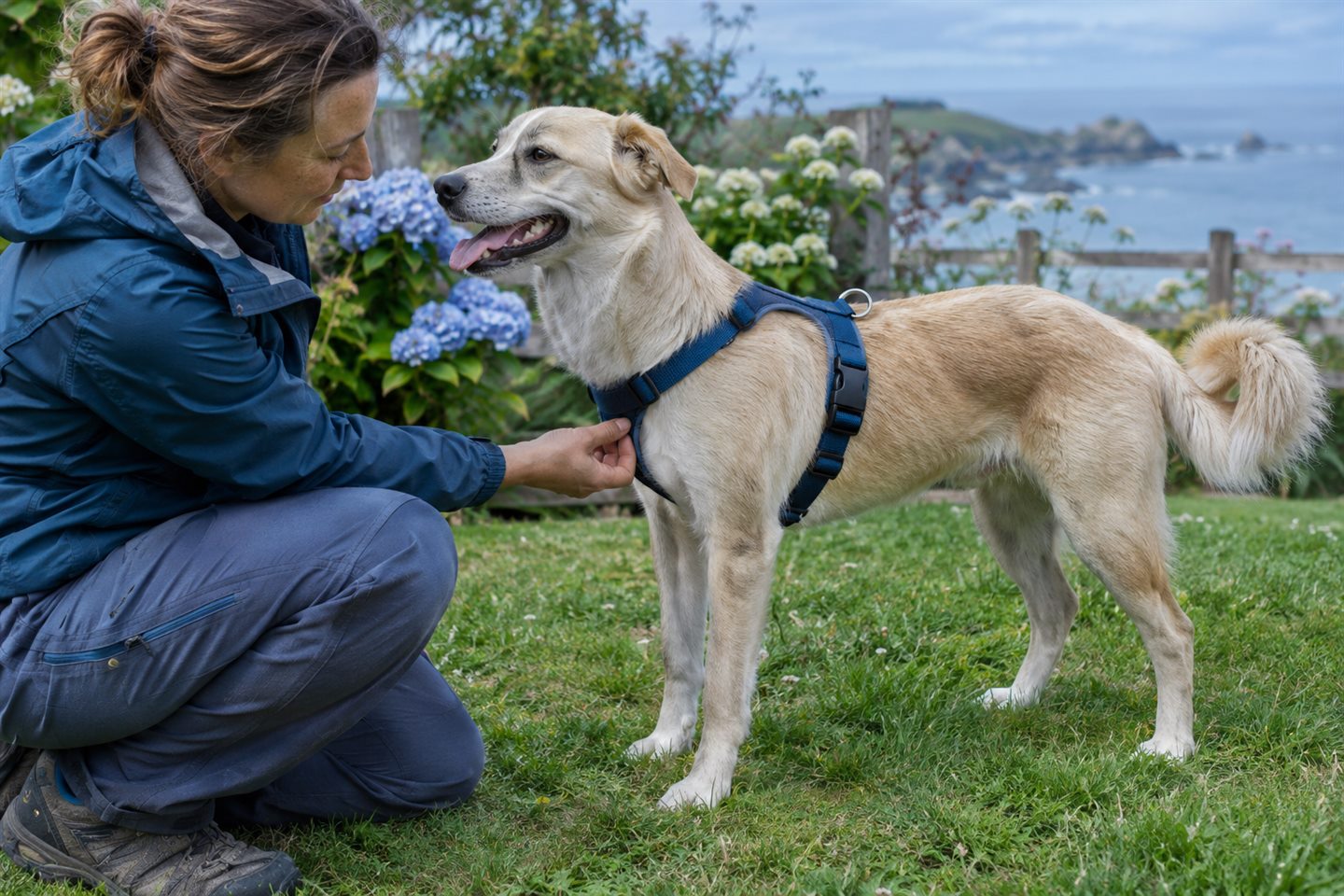
Once fitted according to the instructions, look at every strap rather than only the chest panel. Check for twisting, pressure near the throat, contact close to the armpits, and buckles pressing into the body. Make adjustments in the sequence the design requires. A generic finger-width rule is not a substitute for its actual fitting directions.
Part the coat gently where necessary so you can see what lies beneath it. A thick coat can hide a loose strap or a poorly positioned edge. Avoid tightening simply to flatten the fur. Check that adjustment sliders remain secure and that loose strap ends are managed as the manufacturer intends.
Photograph the fit from the side and front for your own comparison if the dog is comfortable. Pictures can help you notice a shifted strap later, but they do not replace watching movement. Ask for professional fitting help if you cannot tell whether a panel or strap is correctly positioned.
Watch ordinary movement in a secure area
Allow the dog to walk a few steps in a safe enclosed space while you observe. Look at the harness from both sides and see whether it shifts or catches. Keep the lead secure without pulling to test the dog's resistance. Do not create an escape attempt to find out whether the harness holds.
Notice whether the dog can turn, lower their head, sit, and move in their usual comfortable way. If a movement changes unexpectedly, remove the equipment when safe and investigate. Pain, stiffness, or an unusual gait requires veterinary advice. A different harness may not solve a problem that comes from the animal's health.
Recheck after the brief trial. Straps may settle differently once the dog has moved. Inspect areas that contact the skin and stop using the product if you find rubbing or soreness. Introduce the first outdoor use in a manageable setting, with current identification and a handling plan appropriate to the dog.
Match equipment to the activity
An everyday walking harness is not automatically a vehicle restraint, lifting aid, or specialist sports product. Check the stated purpose and any independently verifiable testing that matters to your intended use. A metal attachment ring alone does not demonstrate crash protection or suitability for supporting a dog's weight.
Think about the whole walking setup: lead, attachment point, handler control, identification, and the route. A harness does not teach loose-lead walking by itself. If pulling makes outings unsafe, seek reward-based training support and appropriate management rather than relying on a promise printed on packaging.
Avoid adding accessories that interfere with adjustment, movement, or ventilation. A tracker, light, or extra clip needs a suitable attachment method and should not create a snagging or chewing hazard. Follow both products' instructions, and recheck the fit after anything is added or removed.
Revisit fit as the dog changes
Growth, weight changes, grooming, and seasonal coat changes can alter the arrangement. Make a quick inspection before walks and a more thorough check regularly according to use and product instructions. Replace damaged equipment rather than relying on a temporary knot, tape, or a partly working buckle.
Clean and dry the harness as directed, then inspect it before storing. Wet straps left in a crowded bag may be unpleasant to handle and difficult to check. Keep spare equipment organised so a sitter does not reach for an old harness whose adjustment no longer suits the dog.
The final decision is practical: can the dog wear the harness comfortably, move normally, and remain securely managed in the intended setting? If any part is uncertain, seek advice before a demanding outing. Thoughtful fit checks take a little time at home and reduce the need to solve equipment problems when your attention should be on the street.
Make the spare setup easy to identify
If you keep more than one harness, label or store them so a caregiver can distinguish the current fit from an older size. A product that suited a puppy may remain in the cupboard long after the dog has outgrown it. Spare equipment needs the same inspection as the item used every morning.
Show a sitter the correct orientation and attachment point in person. Ask them to fit it while you observe, then check the result together in a secure room. A quick photograph can support the demonstration, provided it does not encourage someone to overlook changed fit or damaged hardware later.
Leave contact details for fitting questions and make the walking plan explicit. If the sitter cannot fit the harness securely, they should contact you or the agreed backup rather than improvising a new strap arrangement. The practical value of a familiar harness depends partly on the person using it understanding how it works, especially when the dog is excited and the front door is nearby.