A cat-friendly home does not begin with more square metres. It begins with access: a place to rest without interruption, somewhere to scratch, reliable toilet facilities, and routes that do not require passing another animal at close range. In a small flat, those details can matter more than another large piece of furniture.
Before buying anything, watch how your cat uses the rooms you already have. Notice where they pause, which windows they choose, and whether they hesitate at a doorway. A cat who sleeps on a cupboard may be showing you a useful preference for height. A cat who avoids the corridor may be telling you something about noise or traffic. The aim is to improve daily choices rather than fill every corner with equipment.
Draw a map of the ordinary day
Sketch the rooms and mark food, water, litter trays, resting spots, and scratching surfaces. Then add the human routines: the washing machine, the front door, a busy desk, and the route children take between rooms. This simple map can reveal why an apparently quiet corner is disturbed several times an hour.
Look for bottlenecks. If food, water, and the only litter tray are all behind the same doorway, one closed door removes several essentials at once. If two cats share the space, one animal sitting in the hallway may make the other reluctant to pass. You do not need to assume conflict to offer alternative routes and separate resources.
Make one change at a time where possible. Moving everything in a single afternoon removes familiar landmarks and makes it hard to tell which adjustment helped. Keep established essentials available while introducing an alternative. Your cat's use of the new arrangement is more informative than how neat the room looks afterwards.
Add useful height safely
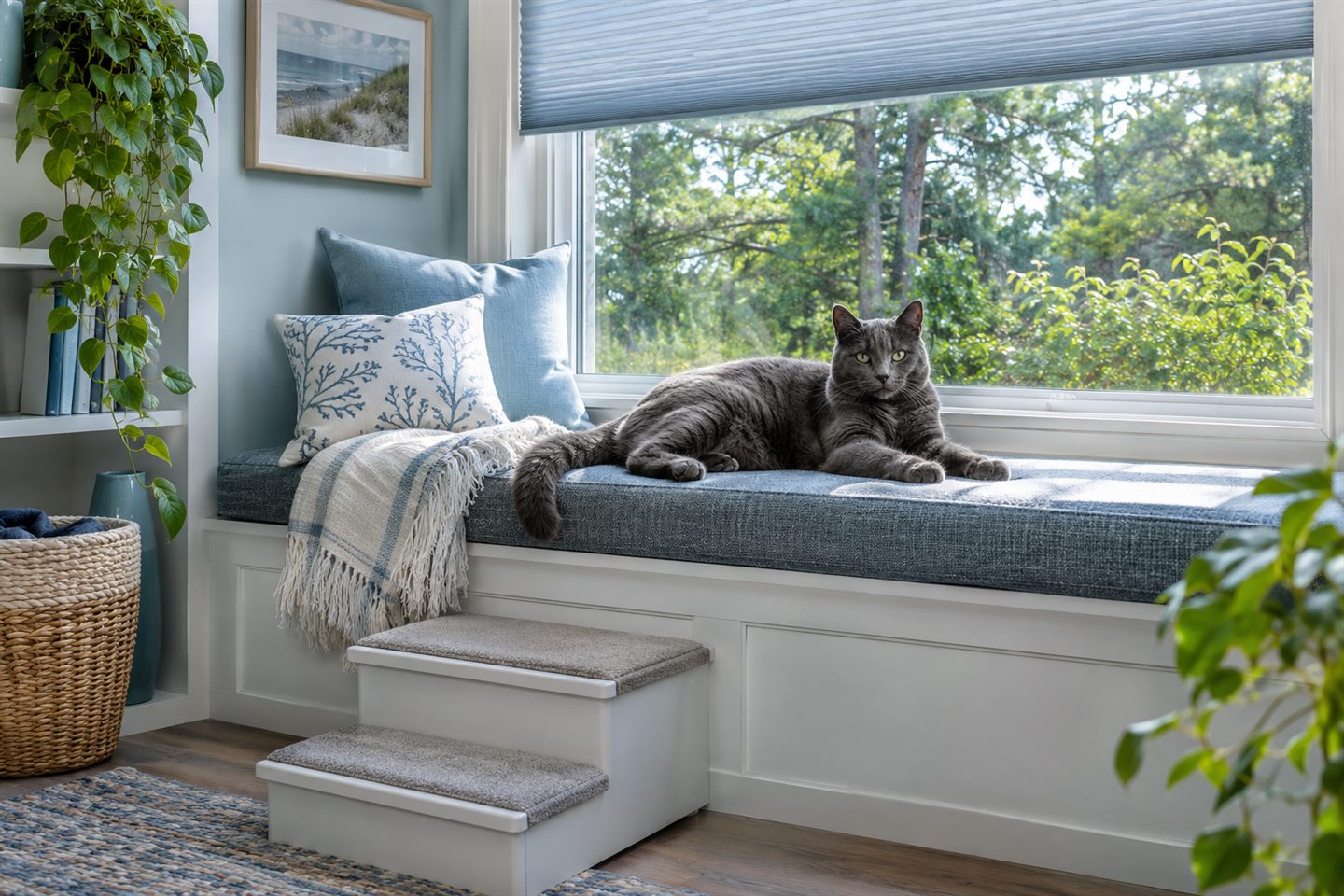
Height can give a cat somewhere to observe activity without being in its path. Consider an appropriate stable cat tree, a broad secure perch, or a piece of furniture that already provides safe access. Stability matters more than a dramatic height. Follow fixing instructions and check that the structure will not tip when the cat jumps.
Think about the journey up and down. A perch is less useful if reaching it requires a difficult leap over a slippery surface. Older cats and cats with mobility problems may need lower options and veterinary advice about access. Avoid forcing a cat onto a new structure to show them how it works.
Keep elevated resting areas away from unsafe windows, cooking surfaces, fragile objects, and hanging cords. A window view can be interesting, but a screen must be properly secured and suitable for the opening. Never assume an ordinary insect screen will prevent a fall. You can offer a good view from inside without leaving an escape route.
Make hiding an everyday option
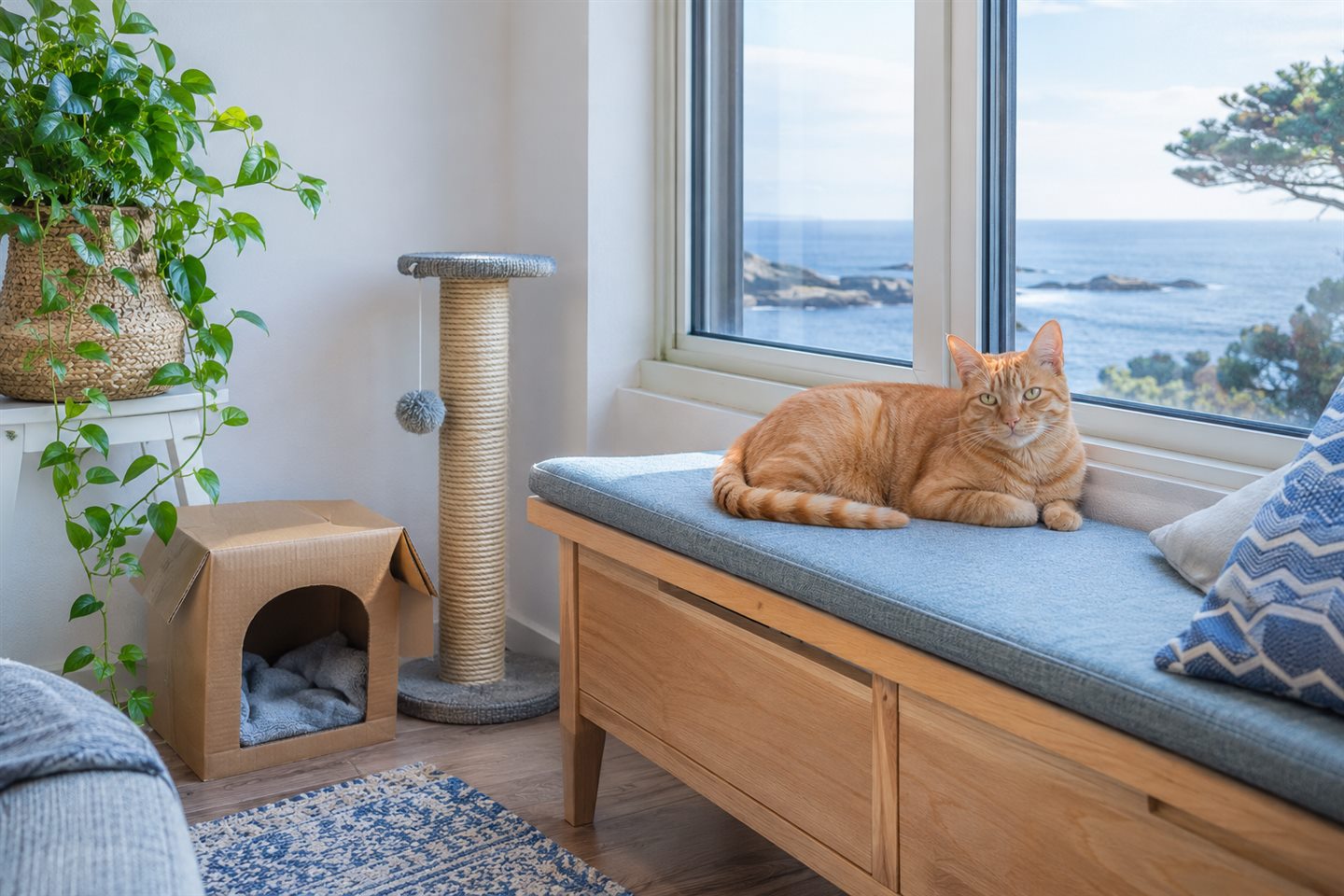
A covered bed, a suitable open carrier, or a sturdy box can offer a retreat. Place it where the cat can enter and leave without being cornered. Remove staples, handles, tape loops, and anything that could be swallowed from homemade options. Check enclosed spaces before moving or discarding them.
Give the hiding place a clear household rule: no reaching in to pull the cat out. Visitors and children need to understand that retreat is allowed. You can sit nearby quietly if the cat chooses company, but the animal should decide when to approach. A safe retreat loses its value if it reliably leads to unwanted handling.
Hiding is a normal option, yet a sudden increase can signal a problem. If your cat becomes unusually withdrawn, stops eating, changes toileting habits, or appears uncomfortable, contact a veterinarian. Improving furniture placement does not replace investigating a change in health or behaviour.
Separate resources with intention
Small rooms often encourage us to arrange all pet supplies together. Convenience for the person is not always convenience for the cat. Consider separate locations for eating, drinking, and toileting, while ensuring each remains easy to reach. Avoid placing a litter tray beside noisy equipment or somewhere a door regularly blocks access.
In a household with several cats, offer resources in distinct places rather than clustering every bowl in one row. Separate positions can reduce the need to approach another animal for an essential activity. A large shared station may look generous while still creating a single point of access.
Keep changes practical enough to maintain. A water bowl hidden behind furniture may be quiet but difficult to clean and refill. A litter tray in a cupboard needs suitable ventilation and unrestricted access. Check the arrangement from the cat's height: entrances, sightlines, and footing often look different from down there.
Put scratching where it gets used
Choose a stable scratching surface and offer it near a place the cat already scratches or stretches. A post hidden in a spare room may be ignored because it is absent from the cat's normal route. Some cats prefer vertical surfaces, others horizontal ones, so try an appropriate alternative before concluding that scratching products do not work.
Check the base with your hand. If the post wobbles easily, it may move under the cat's weight. Choose a size that allows comfortable use, and replace damaged materials before loose pieces become a hazard. Avoid punishing scratching; redirect by making a suitable surface convenient and appealing.
Protect furniture during the transition using safe covers appropriate to the material. Reward the cat when they choose the scratching area, without startling them or interrupting. The useful adjustment may be a change of position rather than a new product. Watch the cat's preference over several ordinary days.
Keep play possible without clutter
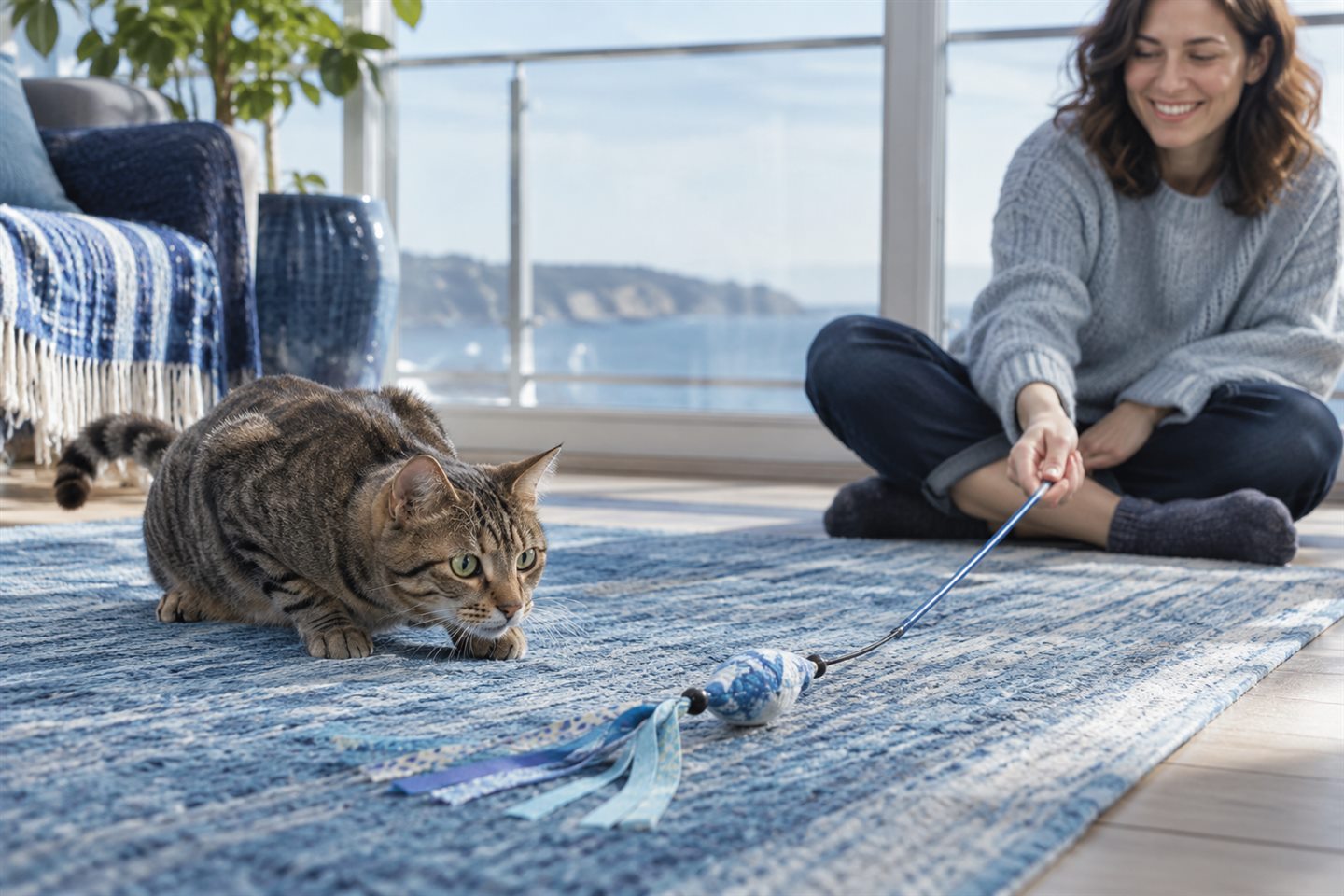
You do not need toys spread across the entire floor. Keep a small selection, bring out an appropriate toy for supervised interaction, and store it safely afterwards. String and wand toys should be put away when you cannot supervise. Remove damaged pieces promptly and choose items that cannot be swallowed.
Leave a clear strip of non-slip space for movement. In a compact room, that may mean moving a basket rather than buying equipment. Offer short opportunities that suit your cat, letting them pause or leave. Avoid directing play towards hands, another resting animal, or a difficult jump between unstable surfaces.
Review the home after a week. Which options are used? Which remain empty? A thoughtful small space changes with the animal living in it. A lower resting spot may become more useful with age; a quiet corner may need moving after a new appliance arrives. Comfort comes from reliable choices and attentive adjustments, not the number of products in the room.
Check the home during its busiest hour
A layout that works at midday may work differently when everyone comes home. Watch the cat's route while coats are being hung up, dinner is being prepared, and children are moving between rooms. Keep observation unobtrusive; there is no need to draw the cat into the busiest space to test the arrangement.
Look for small preventable interruptions. A bag placed beside a litter tray may narrow the entrance. A chair pushed back from a desk may block a route to the window. A visitor's shoes may occupy the only clear path past another pet. Give these everyday objects a home that preserves access to essentials.
Then review the quietest hour. Does the cat have somewhere comfortable while the main room is dark or a bedroom door is closed? Good access needs to survive ordinary changes in household activity. The map you drew at the start becomes useful again here: compare what is theoretically available with what the cat can actually reach throughout the day.
Further reading
Cats Protection on arranging a cat's home and RSPCA guidance on feline environments offer background on the resources cats need. Seek individual advice when a cat's behaviour changes.