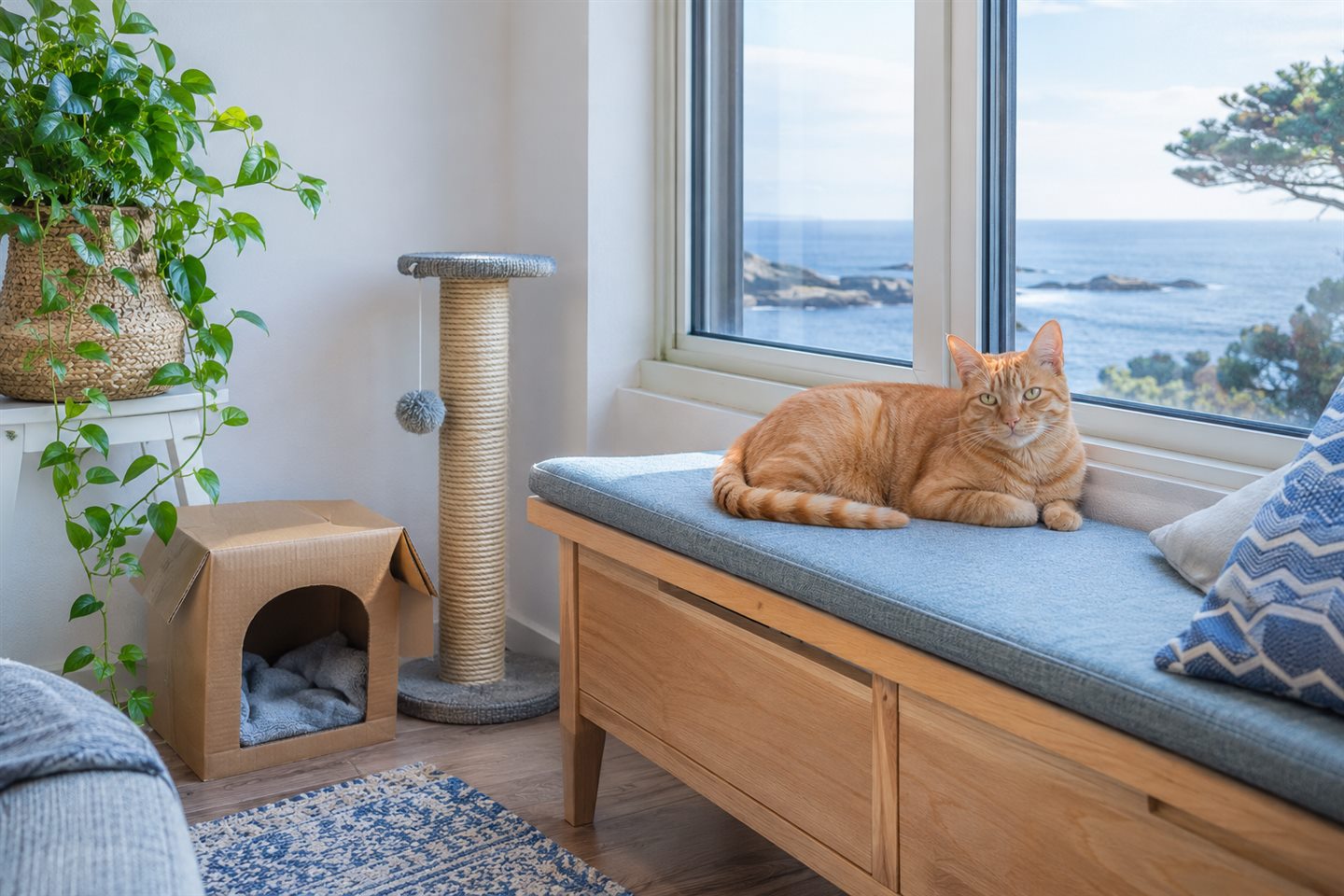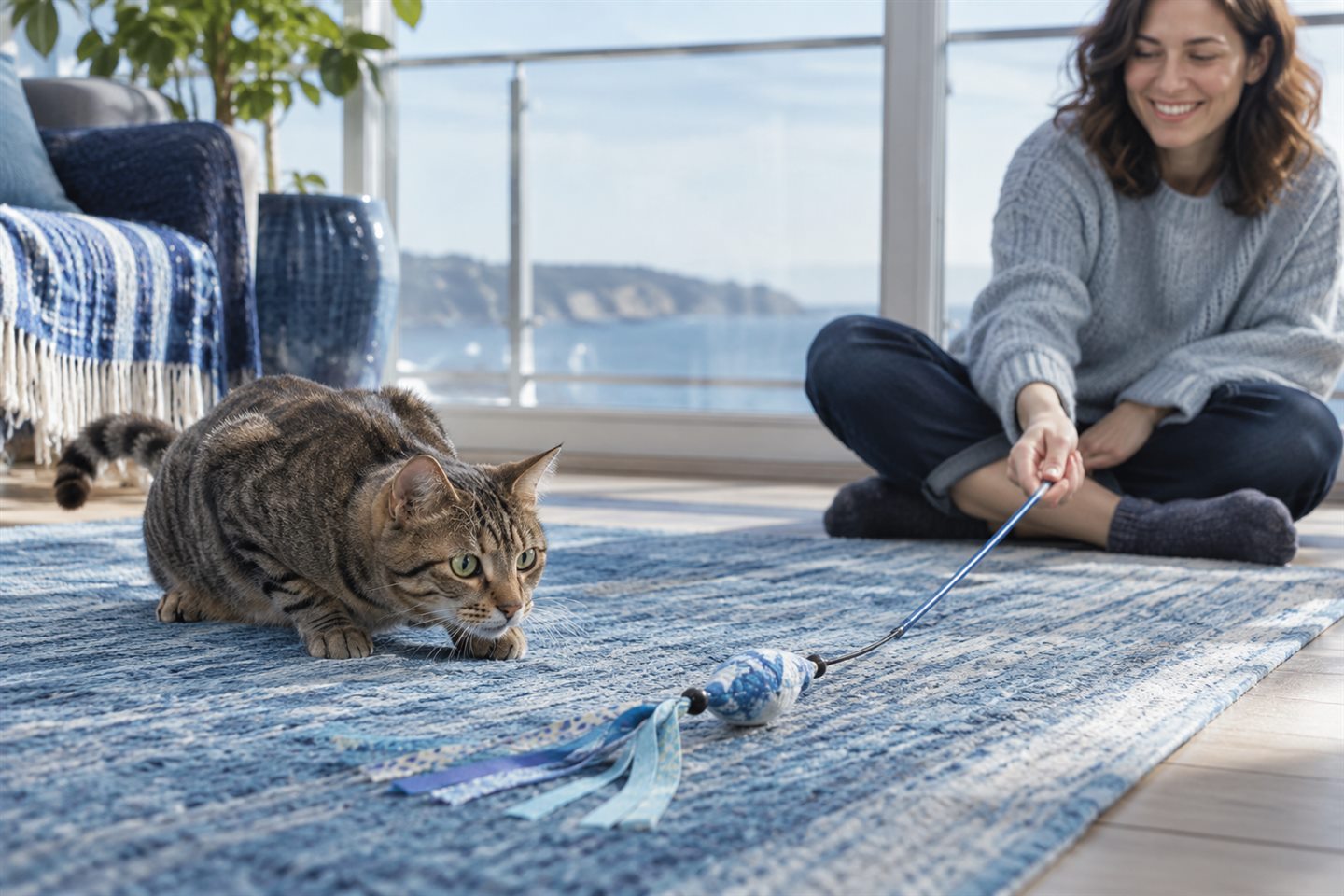
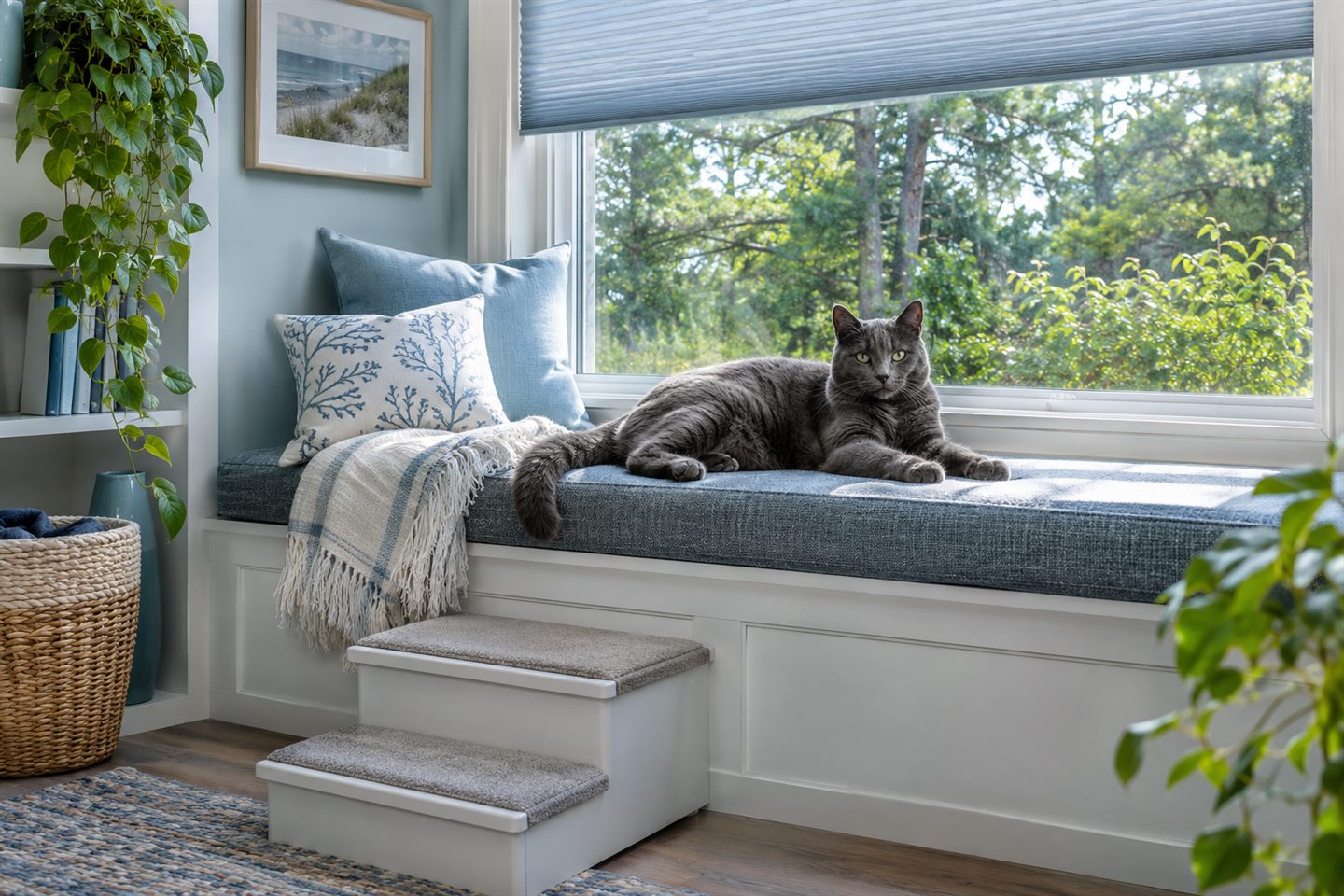
The most popular seat in a home is not always the sofa. For many cats, it is the narrow strip of sunlight beside a window, complete with a view of the pavement or a moving tree. A well-planned window spot can turn an ordinary corner into a useful resting and observation area. A poorly planned one can introduce unstable furniture, hanging cords, or an unsafe opening.
Start with the window your cat already chooses. Watch how they reach it, how they turn around, and whether they seem relaxed once there. You do not need to buy a special perch immediately. The first task is checking access, security, and comfort. From there, you can improve the seat in ways that suit your cat and the room you actually live in.
Check the opening before the furniture
Inspect the window and its locking mechanism. An open window is not made safe simply because a cat has never tried to leave before. Screens, guards, and restrictors need to be suitable for the window and installed according to their instructions. Ask an appropriate installer if you are unsure about the arrangement. Do not rely on a loose insect screen to prevent a fall.
Keep the window closed until you have a secure solution. Consider how other household members use it: someone may open it to cook, clean, or cool the room without noticing the cat nearby. Agree on the arrangement and make it easy to follow. Safety should not depend on one person remembering a complicated sequence every day.
Look for blind cords, curtain loops, electrical cables, and trailing plants. Secure or remove entanglement hazards and keep unsuitable plants out of reach. Check the surrounding furniture too. A fragile lamp beside a favourite landing place creates a problem even when the window itself is closed.
Build a stable route up and down
A useful seat begins with a reliable approach. Your cat should not need to jump over a chair that rolls or land on a polished surface with little grip. Choose a stable base and enough space to turn comfortably. If you install a purpose-made perch, follow its weight limits, fixing method, and inspection instructions.
Do not assume that suction cups, brackets, or straps remain secure indefinitely. Check them as recommended, especially after cleaning or temperature changes. A small movement that seems harmless to a person can matter when a cat jumps onto the edge. Remove the perch from use if any attachment is damaged or uncertain.
Offer lower access steps if they are appropriate for your cat, and make sure these are stable too. Cats with pain or mobility changes may need a different arrangement and veterinary advice. Avoid encouraging difficult jumps as exercise. The goal is a comfortable place the cat can choose, not a challenge they must overcome to reach the view.
Think about the view from the cat's position
Sit near the proposed seat and look at the activity outside. A quiet garden may offer gentle movement to watch. A busy passage where unfamiliar cats regularly approach the glass can produce a very different experience. The best window is not necessarily the one with the largest view or the strongest sunlight.
Observe your cat over several ordinary days. Do they settle, wash, or sleep? Or do they repeatedly charge at the glass, vocalise, or remain tense after another animal leaves? If the view seems unsettling, offer another location or use an appropriate visual barrier on part of the glass. You can preserve daylight without requiring constant exposure to a difficult sightline.
Keep food and essential resources elsewhere if the window is busy. A cat should not have to eat beside something that worries them. Do not place a bird feeder immediately outside in an attempt to guarantee entertainment; consider wildlife welfare and whether the close activity actually helps your individual cat relax.
Choose bedding for maintenance as well as comfort
A thin, washable covering may be more practical than a deep cushion on a narrow surface. Check that it stays in place and does not reduce the safe standing area. Avoid loose loops, tassels, and damaged foam. The seat should remain easy to inspect, clean, and dry.
Watch the temperature during the day. Direct sunlight can make a spot uncomfortable even when the rest of the room feels pleasant. Provide shade and another resting option away from the window. Cats should be able to move freely between locations; never close them into a sunny enclosure or assume they will remain comfortable because they chose it earlier.
In cold weather, check for draughts and condensation. Damp bedding needs changing rather than covering with another layer. Position the seat away from portable heaters and exposed hot surfaces. A comfortable location supports resting without requiring an electrical warming product, especially if the cat cannot easily move away.
Introduce the seat without placing the cat on it
Make the area accessible and allow your cat to investigate. A familiar washable cloth can make the location less unfamiliar, provided it is safe for the surface. You can reward voluntary interest, but there is no need to lift the cat onto the seat repeatedly. They may prefer another place, and that preference is useful information.
Keep the surrounding room calm during the introduction. An audience, a camera held close, or another pet waiting underneath may discourage exploration. Allow the cat to leave and return. If they use the seat briefly, resist rearranging everything to improve the photograph. Familiarity often matters more than decorative perfection.
If the cat ignores it, review the practical details before buying a replacement. Is the approach slippery? Is the view blocked? Does a curtain brush their face? Is the seat beside a noisy appliance? Change one factor and observe again. Sometimes an ordinary low chair near the same window works better than a complicated suspended platform.
Make inspection part of the household routine
Check the seat while cleaning the window or changing bedding. Look at fixings, surface wear, nearby hazards, and the condition of the access route. Household changes can alter the arrangement: a new plant, a moved table, or a longer curtain may create a difficulty that was absent at installation.
Notice changes in the cat as well. Hesitating before a jump, abandoning a favourite perch, or choosing much lower resting places can justify a veterinary conversation, particularly when the change is sudden. Do not simply increase the reward to encourage a movement that may be uncomfortable.
A good window seat is one option among several. Keep quiet hiding places and resting areas available elsewhere, so your cat can step away from outside activity. Over time, the most useful measure is simple: can the cat reach the place safely, choose it freely, and rest there comfortably? If those conditions hold, a small corner can earn a lasting place in their day.
Consider cleaning and access for people
A window seat still needs to coexist with curtains, cleaning, and ordinary maintenance. Plan how you will remove bedding and inspect fixings without opening an unsafe route. If the perch must be taken down for window cleaning, keep the cat in another comfortable secure area until everything is restored and checked.
Do not leave a partly dismantled seat accessible while searching for tools. Follow the product's removal and reinstallation instructions, and check the route up afterwards. A chair moved temporarily for cleaning can change the distance of a jump even when the perch itself returns to the same position.
Make these arrangements clear to anyone helping in the home. A cleaner or visitor should not have to guess whether a window can be opened behind the cat's favourite seat. A simple household agreement protects the setup without making it complicated. The perch is most useful when its safety is maintained during the unremarkable tasks that happen around it every week.
Further reading
RSPCA advice on creating a good home for cats covers access to resting and hiding opportunities. For the safety of a particular window or fixing system, follow the manufacturer's instructions and obtain appropriate installation advice.