A mat can give a dog a familiar place to pause while you read, prepare a simple meal, or sit beside a visitor. It is useful because the location is clear and portable. It is not a switch that turns an excited or worried animal into a relaxed one, and it should never become a place where a dog is held through distress.
Begin at home when your dog has had appropriate opportunities for toileting, movement, and rest. Choose a quiet moment rather than starting while dinner guests are arriving. The early work is small: noticing the mat, stepping onto it, and finding that good things happen there. Build from what your dog can do comfortably, with short sessions and a clear opportunity to leave.
Choose the location before the cue
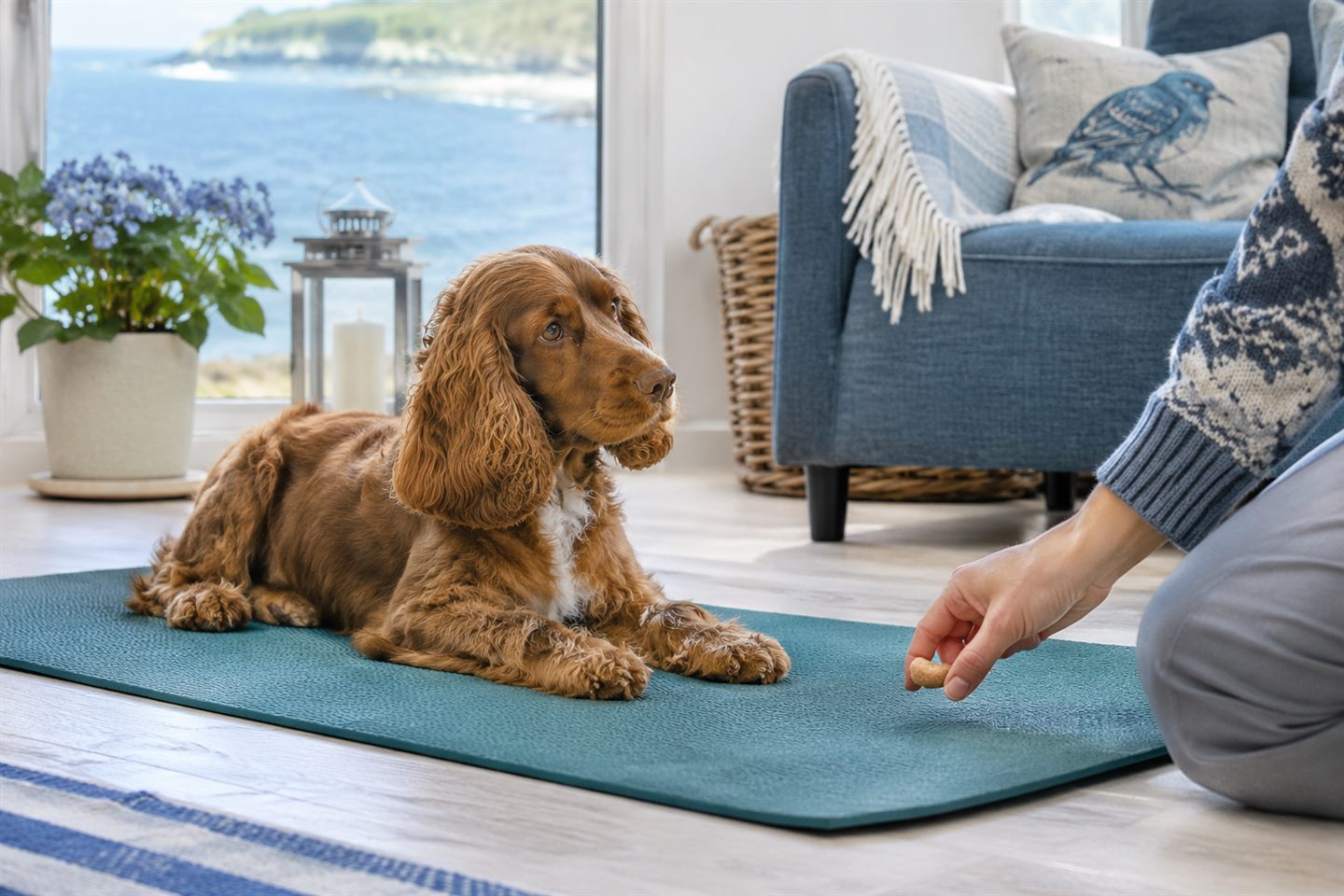
Put a suitable non-slip mat in a room where little is happening. Leave enough space around it for the dog to approach and turn. Avoid a doorway, a busy kitchen work area, or a place another animal needs to pass closely. The surface should be comfortable for your dog's body and safe for their chewing habits.
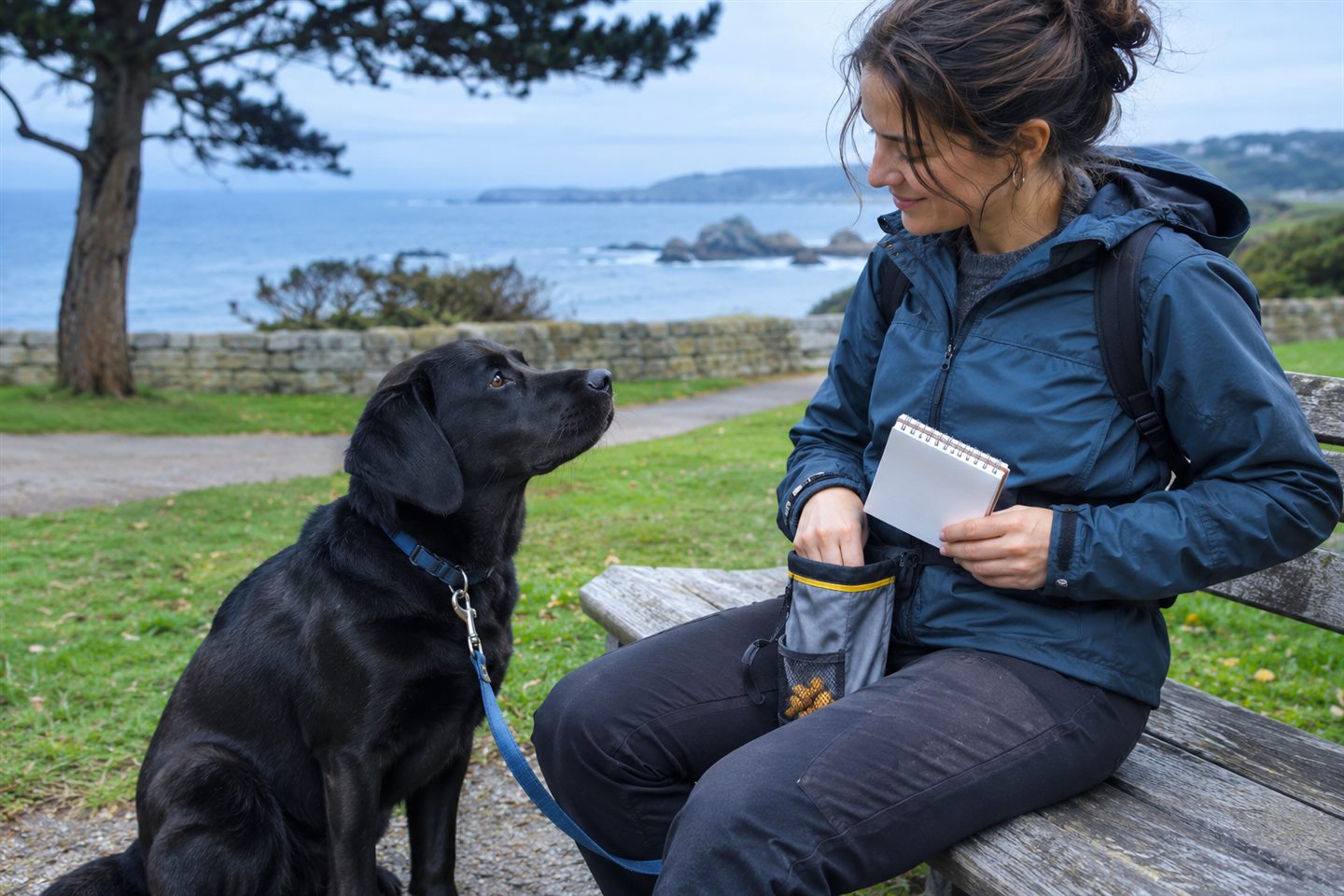
Prepare small rewards that fit the dog's established diet. If there are medical dietary restrictions, ask your veterinary team about suitable options. Keep the rewards within easy reach so your attention can stay on the dog. A portion of the normal daily food may work for some dogs, but participation should not depend on withholding meals.
Sit or stand nearby without repeatedly pointing or moving the dog into place. Before introducing words, decide what you will reward. At first, that may be a glance towards the mat or one paw on its edge. A clear small step makes the activity easier to understand.
Reward voluntary interest
When your dog looks at or approaches the mat, mark the moment with a consistent quiet word and offer a reward. Place it so the dog can collect it comfortably near the mat. Repeat only while the dog remains interested. If they move away, allow a pause rather than calling them back insistently.
As interest grows, reward stepping onto the mat. You do not need to require all four paws immediately if your dog is uncertain. Build the picture gradually. Keep your own movements calm so reaching for food does not become the most exciting event in the room.
Avoid pushing the dog's body, tightening a lead to keep them in place, or repeatedly asking for a down they cannot manage. Pain, surface discomfort, or uncertainty may affect what they can offer. If a movement looks awkward or the dog suddenly avoids lying down, seek veterinary advice rather than treating it as a training refusal.
Let duration grow in tiny pieces
Once your dog readily approaches the mat, reward a brief moment of staying there. Add time in small increments, with easy repetitions between harder ones. If the dog keeps leaving immediately, reduce the expectation. You may have increased the delay faster than the dog understood.
Introduce a calm release phrase when you are ready to end the short exercise. You can invite the dog to move away for a reward in a clear nearby area, then pause before beginning again. The point is to make the beginning and ending understandable, not to demand immobility.
A relaxed-looking down may develop, but do not confuse stillness with comfort. Notice the whole dog: their movement, willingness to participate, and ability to disengage. A dog who remains frozen while avoiding contact is not demonstrating the same experience as one who chooses to rest beside you. Ask a qualified professional for help if you are unsure.
Add the word after the pattern is familiar
Choose one short cue, such as “mat,” when your dog is already likely to move towards it. Say it once, allow the action, and reward. Repeating the word continuously makes it harder to identify what it predicts. Everyone involved should use the same wording and a similar expectation.
Practise from an easy distance. Standing a little further away is already a change; do not combine it with a visitor, food on the table, and a different room. Change one feature at a time so you can see which part needs more practice.
If your dog does not respond, review the situation. Did they hear you? Are they occupied with something difficult? Is the mat in a new place? Return to an easier version rather than raising your voice. A cue should communicate an achievable action, not become a measure of whether the dog respects the household.
Bring ordinary activity in slowly
When the quiet-room version is familiar, try a modest everyday movement while the dog is on the mat. You might shift in your chair, pick up a book, or take one step. Reward comfortable participation and return to quiet. Avoid immediately walking out of the room or asking for a long stay.
Work separately on each challenge. A different room, another person, or a new noise can alter the exercise. If the dog leaves to investigate, calmly reset when appropriate and make the next repetition easier. The mat routine should help daily life become understandable, not produce a running argument about staying put.
Keep the location away from hazards. A dog beside a cooker or near dropped knives is not safe simply because they know a cue. Use suitable barriers and household management where necessary. Training complements practical safety arrangements; it does not replace them around heat, sharp equipment, children, or other animals.
Know when the mat is the wrong tool
If your dog is frightened of visitors, a mat close to the visitor may make the situation harder. Give distance and a protected retreat instead. If the dog becomes distressed when left alone, asking for a longer mat stay does not address the underlying problem. Seek appropriate veterinary and behavioural support.
End sessions while they are still easy, then put the mat away if your dog may chew it unsupervised. Keep a brief note of the setting and the level that felt comfortable. This helps another caregiver practise consistently without accidentally making the exercise much harder.
Over time, the routine may become part of reading in the evening or settling beside your desk. Let it remain flexible enough for a dog to need a drink, a toilet break, or a different resting position. Success is a useful shared habit built through clear rewards and comfortable practice, with the animal's needs still taking priority.
Agree on a household version of success
Before another person practises, describe the current step. Perhaps you are rewarding an approach to the mat, not a long down. A caregiver who assumes the finished behaviour can unintentionally make the exercise harder by waiting too long before rewarding. A short shared note helps keep expectations consistent.
Include the setting and the ending. Explain that the dog is free to move away between repetitions and that a particular release phrase marks the end of the brief exercise. Ask children to watch quietly with adult supervision rather than repeatedly giving the cue. Several people calling at once can make a clear task confusing.
Review progress in terms of comfortable choices. Your dog may approach readily in the living room but need an easier introduction in the study. That difference suggests more practice in a new setting, not a failure of the original work. Keep the familiar version available so the mat continues to predict an understandable, manageable experience while you carefully add new situations.
Further reading
Dogs Trust's settle-training guidance describes reward-based work on calm behaviour. For fear, pain, or separation-related problems, obtain an individual assessment rather than relying on a general exercise.