Training can feel inconsistent when the only question is whether your dog “did it” today. A recall worked in the kitchen and failed outside. A loose lead lasted half a street and disappeared near the park. Those differences are useful information, but they are easy to lose when you remember only the most frustrating moment.
A small training record helps you see the setting as well as the behaviour. It can show that your dog succeeds at a comfortable distance, struggles when another animal approaches, or needs a shorter session after a busy day. The aim is to choose the next manageable step. You are recording a shared learning process, not grading your pet or competing with someone else's timetable.
Describe one visible action
Choose a behaviour you can recognise without interpretation. “Looks towards me when I say their name” is clearer than “pays attention.” “Walks beside me for three steps with a loose lead” gives you more useful information than “is good outside.” Clear descriptions help everyone reward the same thing.
Keep the first goal small enough to practise safely in an easy environment. Use appropriate equipment and avoid relying on unfinished training near traffic or other hazards. If the behaviour involves fear, aggression, or distress, start with professional guidance rather than using a diary to design a treatment plan yourself.
Write the goal at the top of the record. Leave personality labels out of it. Words such as stubborn, dominant, or dramatic do not tell you what happened or what to change. Describe the event: the dog stopped, looked at another dog, and did not respond to a familiar cue. That account leaves room to investigate the reason.
Record the setting in a few words
Note where you practised and what was nearby. Kitchen, hallway, quiet garden, and busy pavement are different learning environments. Add the distance from a distraction when it matters. “Dog across the road” is more informative than simply “outside.” You do not need precise measurements to recognise a meaningful pattern.
Include the surface, weather, or noise if these affected the session. A slippery floor can change movement. Wind can make an area louder. Building work can alter a familiar route. These details help prevent an environmental difficulty being mistaken for an animal deliberately refusing to cooperate.
Notice your own setup as well. Were the rewards ready? Was the lead tangled? Did another person give a different cue? Training becomes easier to understand when the record includes the human side. The point is to improve the conditions, not assign blame to whoever held the food pouch.
Keep sessions short enough to observe
Work on one small element and pause. Long sessions make it harder to identify when the dog became tired, distracted, or confused. A handful of comfortable repetitions can provide enough information to decide whether to continue, simplify, or finish. End before frustration becomes the main event.
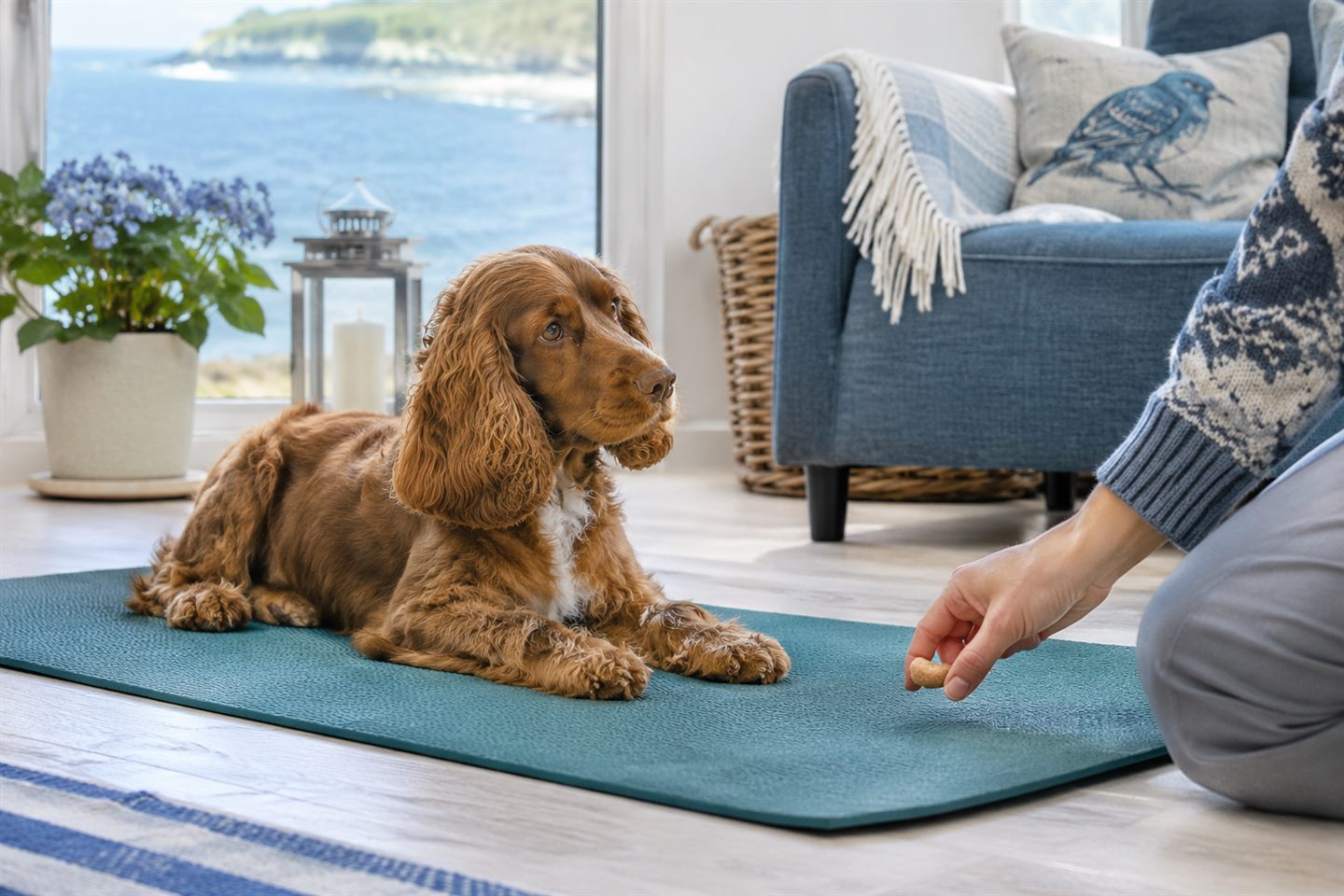
Record what reward you used and whether the dog seemed interested in it. A reward that works in the living room may not be useful in a demanding setting. Do not respond by withholding normal meals or repeatedly presenting food to a worried dog. Reduce the difficulty and consider what the behaviour is telling you.
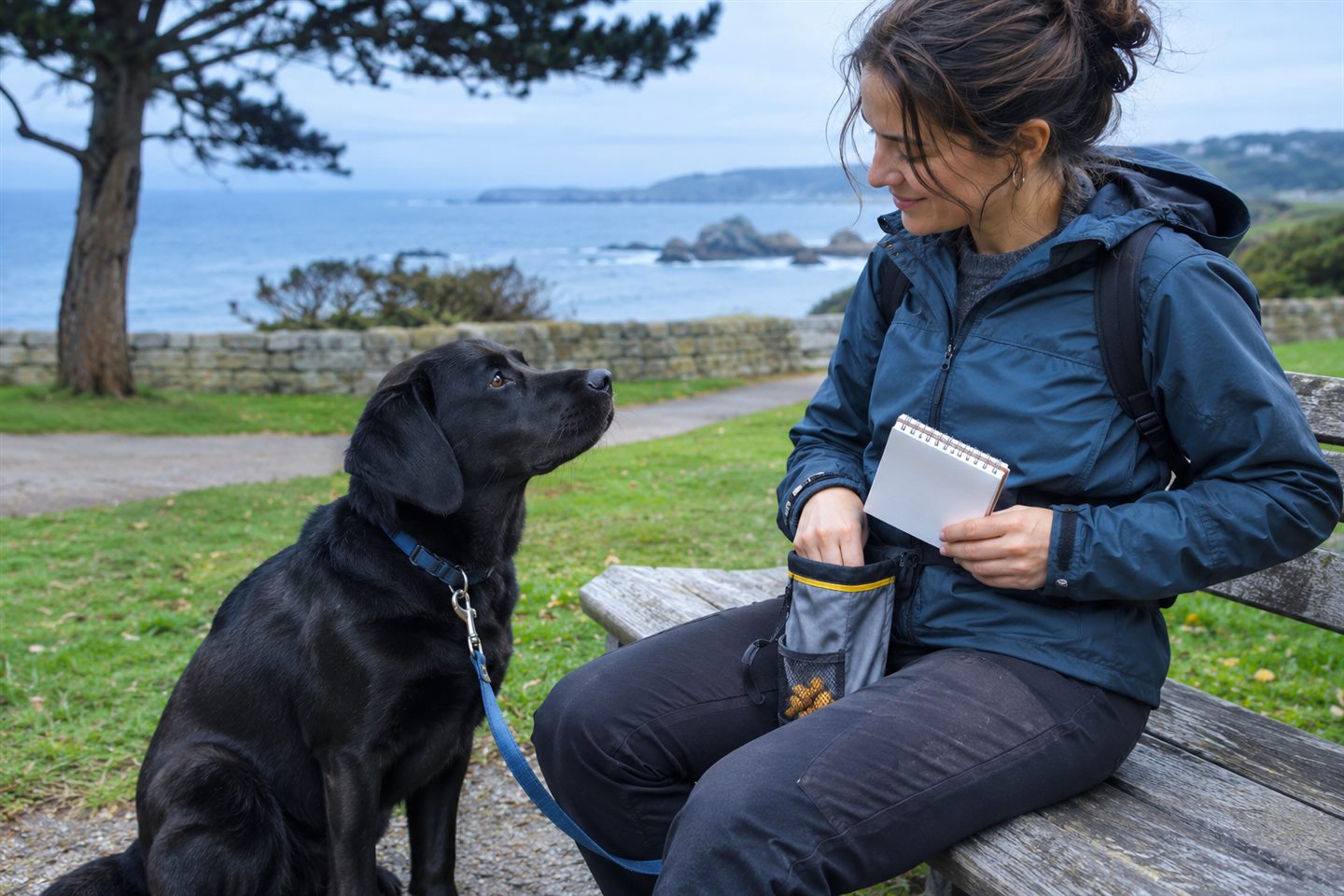
Write the note immediately afterwards. A single line is enough: quiet hallway, name cue, four comfortable responses, paused when delivery arrived. Include the easy successes as well as the interruption. Otherwise the record can become a list of failures that hides the conditions under which learning was going well.
Change one thing at a time
Use the record to choose a modest next step. If the behaviour is comfortable in one room, try another quiet room before adding a crowd. If it works at a distance from a distraction, move closer only when the dog remains comfortable and the setting is safe. Progress does not require increasing difficulty every session.
Avoid changing duration, distance, and distraction together. When several things become harder, you cannot easily tell which one affected the result. Return to an easier version if the dog repeatedly struggles. Reward-based training depends on opportunities to succeed, not repeated rehearsal of a situation that is overwhelming.
Write the planned change before starting. This helps prevent an easy session becoming an ambitious test because the first repetition looked good. You can always finish on that manageable version and try something slightly different another day. A predictable plan is particularly useful when several household members share training.
Look for patterns across the week
Review several notes rather than deciding from one outing. Perhaps the dog responds comfortably before the park entrance but struggles beside the gate. Perhaps evening sessions work better when the house is quieter. Those patterns suggest changes to location, timing, or distance before you ask for more difficult behaviour.
Include rest days and days when you chose management instead of practice. Crossing the road to avoid a difficult encounter can be a sound decision, even if no training repetition occurs. A record should acknowledge safe handling, not encourage you to manufacture challenges to fill every box.
Watch for changes that may need veterinary attention: reluctance to move, unusual fatigue, appetite changes, or sudden difficulty with familiar actions. A training log may help describe them, but it cannot explain them medically. Do not interpret a physical change as a reason for firmer cues or a longer lesson.
Share a useful summary with a professional
If you seek help, bring a short summary of the behaviour, typical setting, and what has changed. A qualified professional can use concrete observations more readily than a broad description that the dog “never listens.” Ask what qualifications, methods, and welfare standards guide their work before committing to a programme.
Only record video when you can do so safely without creating a difficult situation. Do not provoke fear or aggression for a clearer clip, and do not handle a phone while safe lead control requires your attention. Written notes are sufficient when filming would increase risk.
The most helpful record often becomes smaller as you learn. You begin to recognise the comfortable distance, the useful reward, and the moment to pause. Keep enough detail to make decisions, then let the practice remain part of ordinary life. Progress is a growing set of workable situations, with room for weather, health, and the unpredictability of a real dog.
Write down the next easy repetition
End each entry with a small plan you could carry out on an ordinary day. Instead of “improve recall,” write “practise the familiar response in the quiet hallway before dinner.” The plan should name a setting where success has already been comfortable, particularly after a session that felt difficult.
Add what you will avoid for now. You might keep using a lead in open spaces, choose a quieter walking time, or stop practising beside the park gate until you have professional guidance. These are management decisions that protect learning and safety. They do not need to be framed as temporary failures.
Leave room to cancel the practice if the dog is unwell, unusually tired, or occupied by a difficult event. A record is useful because it informs judgement, not because every planned repetition must happen. Over several weeks, this approach produces a more honest picture of learning: clear goals, appropriate conditions, thoughtful adjustments, and a dog whose welfare remains more important than completing a schedule.
Keep the notebook easy to find before you begin. If opening an elaborate app delays every session, a few lines on paper may serve you better. The most useful system is the one that lets you observe the dog without dividing your attention between several devices.
Further reading
The American Veterinary Society of Animal Behavior's position statements include its guidance on humane training. Seek a veterinarian or suitably qualified behaviour professional when a problem involves distress or risk.