A walk can look successful on a fitness tracker and still leave a dog restless at home. The route was long, the pace was brisk, and yet the dog barely had time to inspect a hedge. For many households, the useful change is not adding another kilometre. It is making the walk less hurried and giving the dog a little more say in what happens along the way.
That does not mean dropping the lead or ignoring traffic. It means separating the parts of a walk that require close guidance from the parts where a dog can investigate safely. A quiet patch of grass and a few unhurried minutes can become the most interesting part of a familiar route. Start with one walk, observe how your dog responds, and change the plan according to the individual animal beside you.
Read the route before you leave
Think about your usual circuit in three parts: the journey out, the exploration area, and the journey home. The narrow pavement near your building may be a place for steady movement. A quieter green verge further along might offer more room to stop. Identifying those differences before leaving makes it easier to guide your dog without interrupting every interesting smell.
Choose a route with escape options. A park with several exits lets you change direction if a loose dog appears. A wide pavement gives you room to step aside for a delivery trolley. Look for shade and comfortable footing rather than assuming the shortest route is the best one. Weather, mobility, and your dog's health should determine whether the walk needs to be shortened or moved indoors.
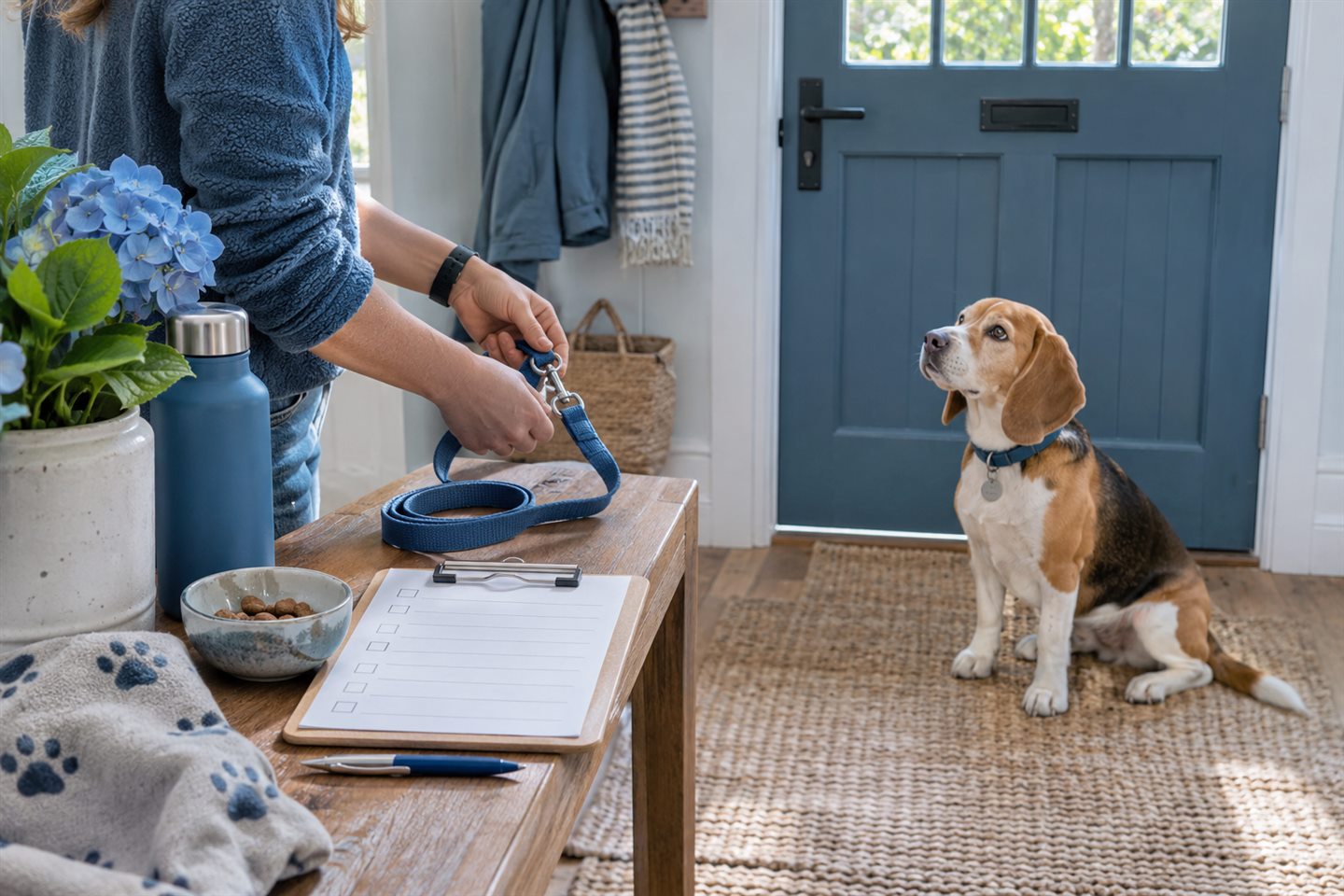
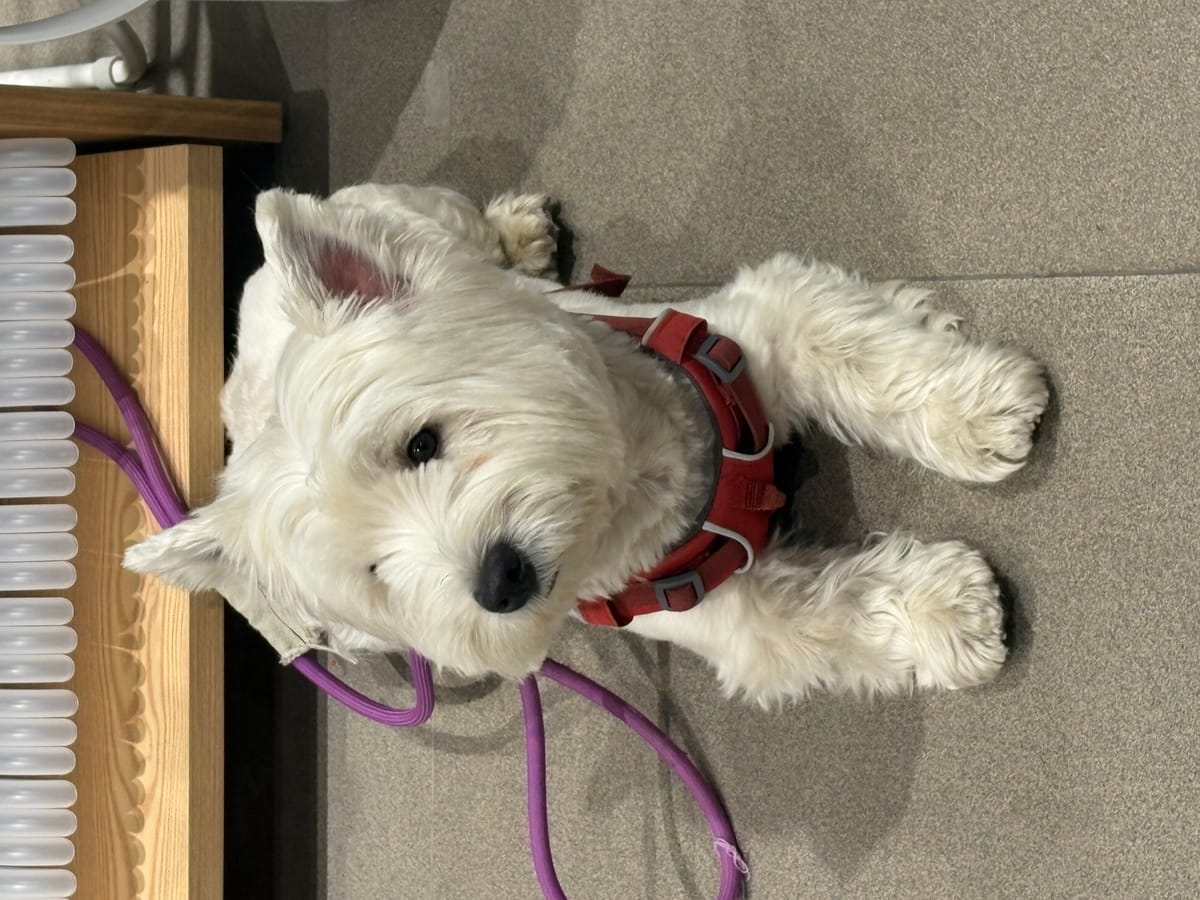
Check the equipment while your dog is still inside. The lead clip should close fully, the harness should be fitted according to its instructions, and identification details should be current. Bring waste bags and drinking water when appropriate. Leave headphones low enough that you can hear approaching people and vehicles.
Make the first few minutes easier
The exit from home is often the busiest part of the outing. There may be lift doors, neighbours, scooters, and the excitement of finally reaching the pavement. Give yourself a moment to organise the lead before opening the door. A dog who is already pulling towards the street does not need an argument on the threshold; they need a manageable starting point.
If the entrance is crowded, wait in a safe spot or choose a quieter departure time. Reward a brief check-in when your dog naturally looks towards you. Move forward when there is room, keeping the lead secure without repeatedly jerking it. You are establishing that the walk can begin calmly, even if the building itself is noisy.
Avoid treating the opening minutes as a test of perfect obedience. A young dog may need time to settle into the environment. An older dog may need a slower start. Notice whether your dog can take a familiar reward and look around comfortably. If they cannot, reduce the difficulty before asking for more.
Give exploration a clear place
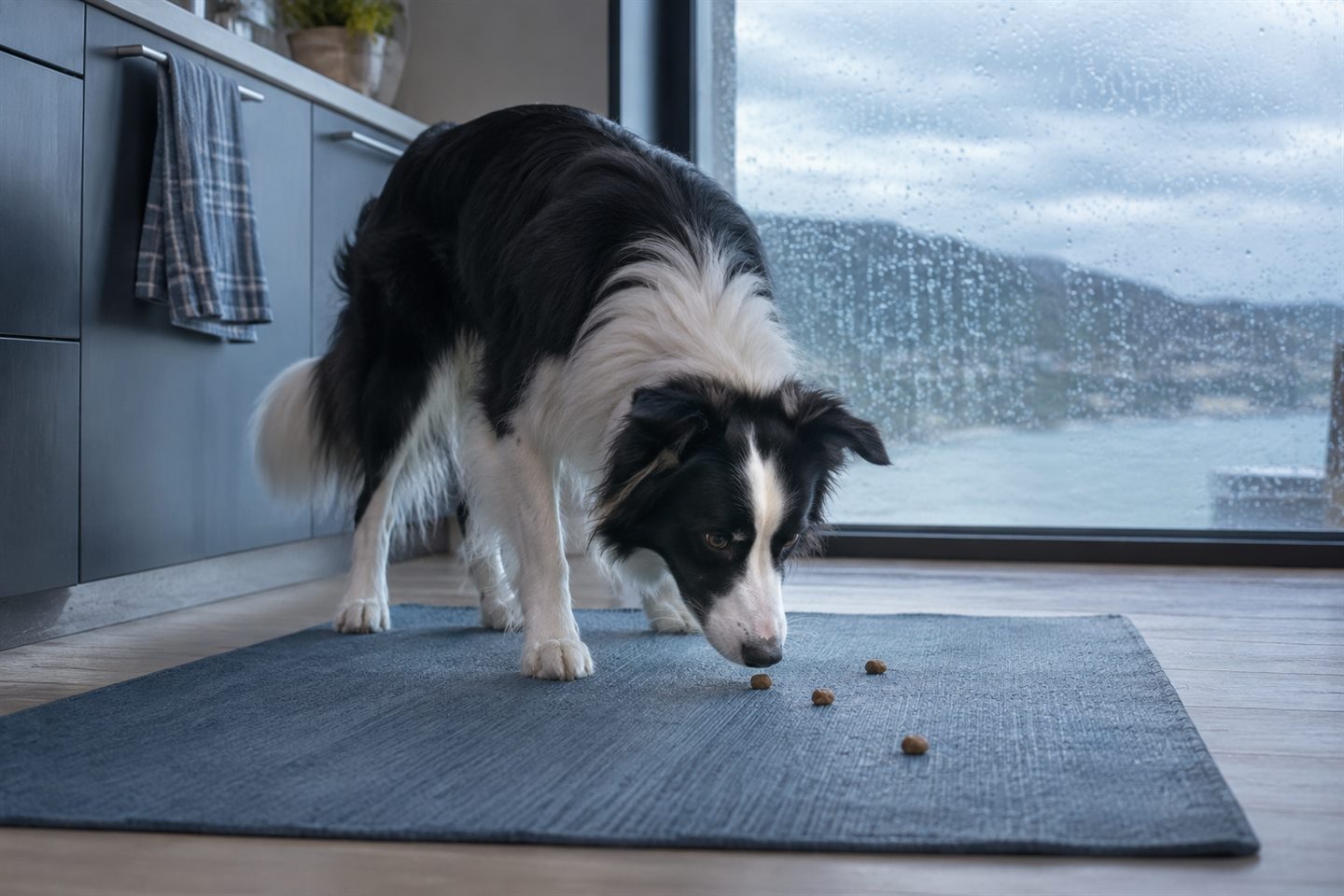
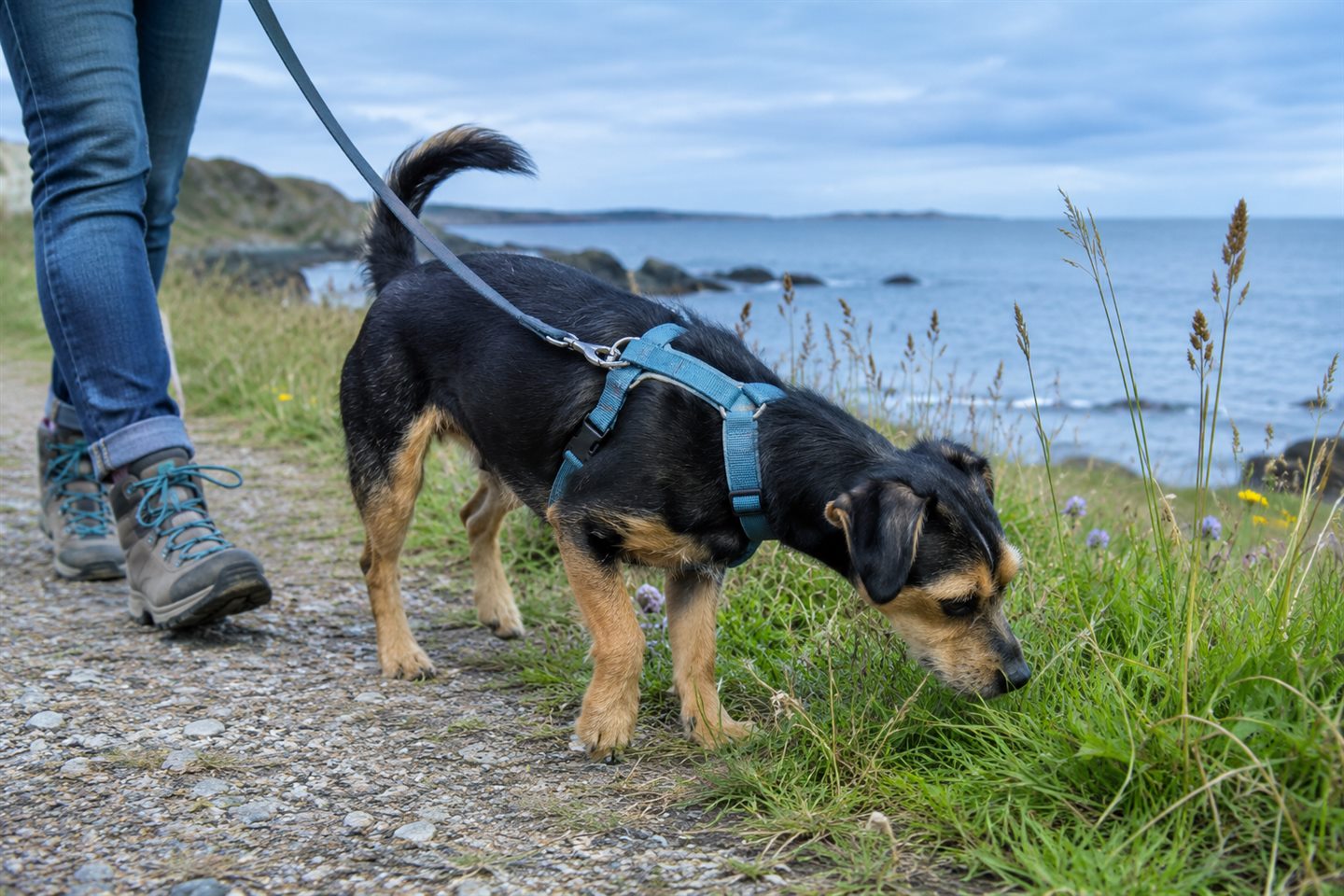
Once you reach an appropriate area, stop walking with a destination in mind. Let your dog investigate within the safe length of the lead. Keep an eye on litter, discarded food, sharp objects, and other animals. Sniffing opportunities should never require access to something hazardous.
You can introduce a simple phrase such as “go explore” when you reach this part of the walk. The phrase does not need to become a formal command. Its value is consistency: it helps distinguish the close-guidance section from the part where there is more choice. Follow at a comfortable distance instead of standing still while the lead pulls tight.
Some dogs investigate one small patch for a surprisingly long time. If the area is safe, try allowing the pause rather than counting seconds. Other dogs prefer to move between several places. Neither style needs correcting simply because it differs from your own walking rhythm. The useful question is whether your dog appears comfortable and remains able to move on with you.
Practise moving on without a struggle
Eventually you will need to leave a smell behind. Give your dog a moment to finish, say your usual transition phrase, and begin moving in an easy direction. Reward them for coming along. Repeatedly tightening the lead while repeating their name can turn a small transition into the most frustrating part of the walk.
Practise this away from exceptionally tempting distractions first. Moving on from a plain patch of grass is easier than moving on from food someone has dropped. If you need to prevent access to a hazard, use the lead and distance to keep your dog safe. Do not expect a newly learned phrase to replace physical management in traffic or around dangerous objects.
An imaginary route can help you plan: five minutes to reach a quiet lane, several minutes exploring, then a short loop home. Those numbers are an example, not an exercise prescription. Your dog's needs may require something much shorter or longer. Ask your veterinarian about appropriate activity when illness, pain, age, or recovery affects walking.
Leave room for different days
A dog who enjoyed a busy route yesterday may find it difficult today. Building works, an unfamiliar dog, strong wind, or a change at home can alter the outing. Watch the dog in front of you rather than insisting on the plan in your head. Creating distance is often more useful than asking for repeated sits beside a frightening distraction.
If your dog freezes, repeatedly scans the surroundings, or tries to escape, find a quieter option. Do not drag them closer to something to prove it is harmless. Persistent fear, sudden reluctance to walk, or a change in movement deserves professional attention. Physical discomfort can look like stubbornness, and training should not be used to push through it.
Keep alternatives ready for days when outdoor conditions are unsuitable. A brief toilet trip, followed by a safe indoor search game using part of the normal food allowance, may fit the situation better. Indoor activity is not a universal replacement for outdoor access, but it can help you avoid forcing a full walk during unsafe conditions.
Judge the walk by the whole experience
After returning home, provide water and a comfortable place to rest. Notice what happens over the next hour without expecting one outing to transform behaviour. Does your dog settle readily? Were they able to disengage from distractions? Did you both spend less time struggling with the lead? These observations are more informative than distance alone.
Keep a small note for a week: route, weather, difficult moments, and the places your dog enjoyed. Patterns may emerge. The street near the school may be easier after drop-off. The quietest patch of park may be too muddy after rain. Adjusting those details is part of good walking, not evidence that the dog is failing.
A satisfying daily walk is a shared routine. It includes guidance where safety demands it, freedom where the environment allows it, and enough flexibility to suit the day. The aim is a dog who can explore while staying connected to you, and an owner who comes home knowing more about what their companion actually enjoys.
Make the route easier for someone else to follow
If another person sometimes walks your dog, show them the exploration area and the difficult transitions. Explain which side streets provide an easy exit and where you avoid stopping. Shared knowledge keeps the walk familiar without requiring every handler to copy your pace exactly. Update the plan when roadworks, weather, or the dog's health changes.
Further reading
AAHA's overview of enrichment explains how activities can support an animal's behavioural needs. This guide applies that general principle to planning an ordinary walk; it does not prescribe an exercise programme.