Rain has a way of exposing the weak spots in a dog's daily routine. The usual park trip disappears, the floor fills with muddy towels, and the dog starts carrying shoes around the living room. It is tempting to keep offering new toys until something works. A more manageable approach is to give the day a simple shape: necessary outdoor breaks, a few easy activities, and genuine time to rest.
Indoor enrichment does not need to resemble an obstacle course. A small home can offer interesting choices without moving every chair or buying another box of equipment. The most useful activities are the ones your dog can enjoy safely and your household can repeat. Begin with familiar games, supervise anything that can be chewed or swallowed, and stop while the experience is still comfortable.
Keep the essentials predictable
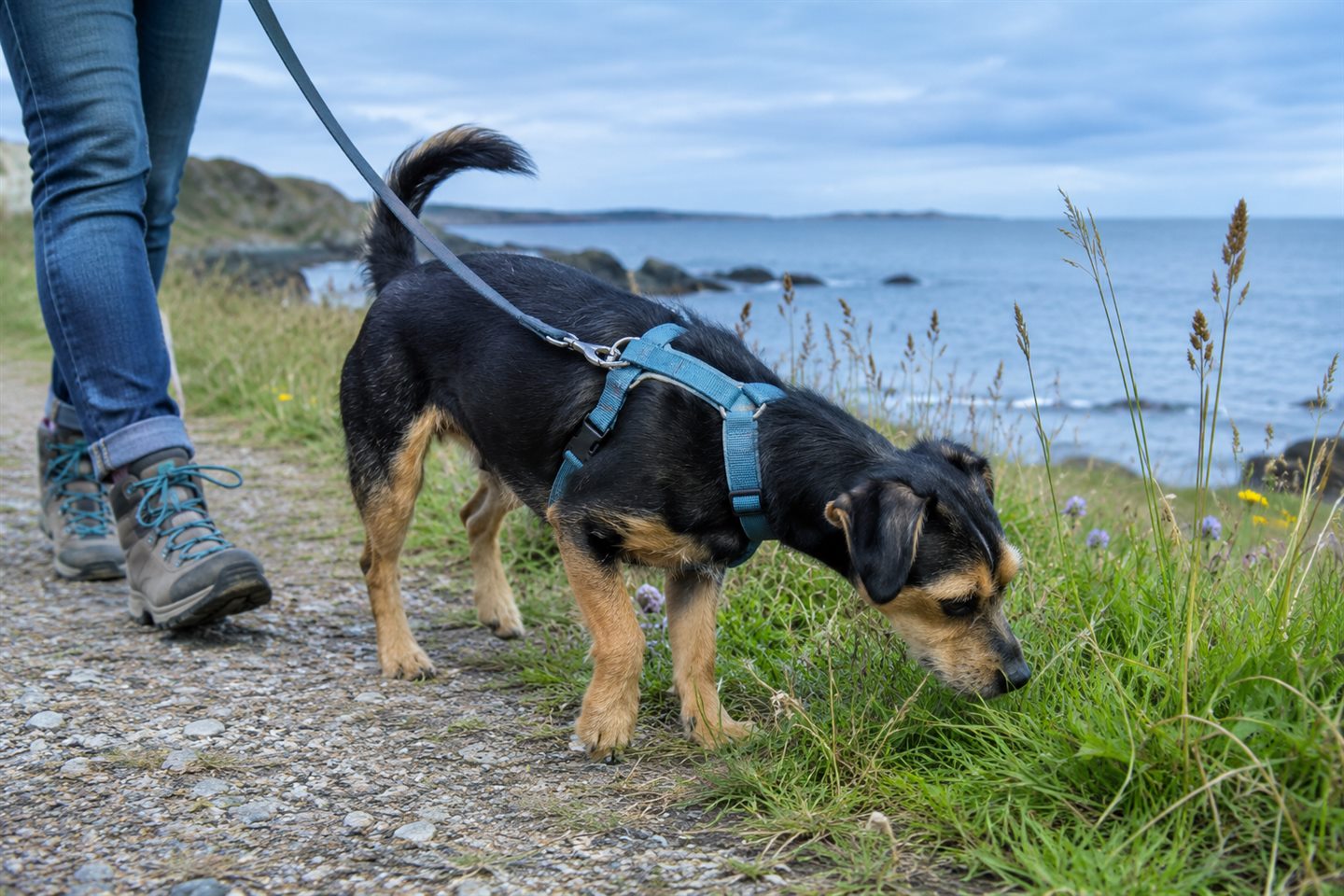
Start with the needs that remain even when the weather is poor: toileting, meals, water, contact, and sleep. Arrange outdoor breaks around conditions and your dog's individual needs. Avoid thunderstorms, flooding, dangerous wind, and other unsafe situations. If your dog has difficulty going outside in rain, a veterinarian or qualified behaviour professional can help you develop an appropriate plan.
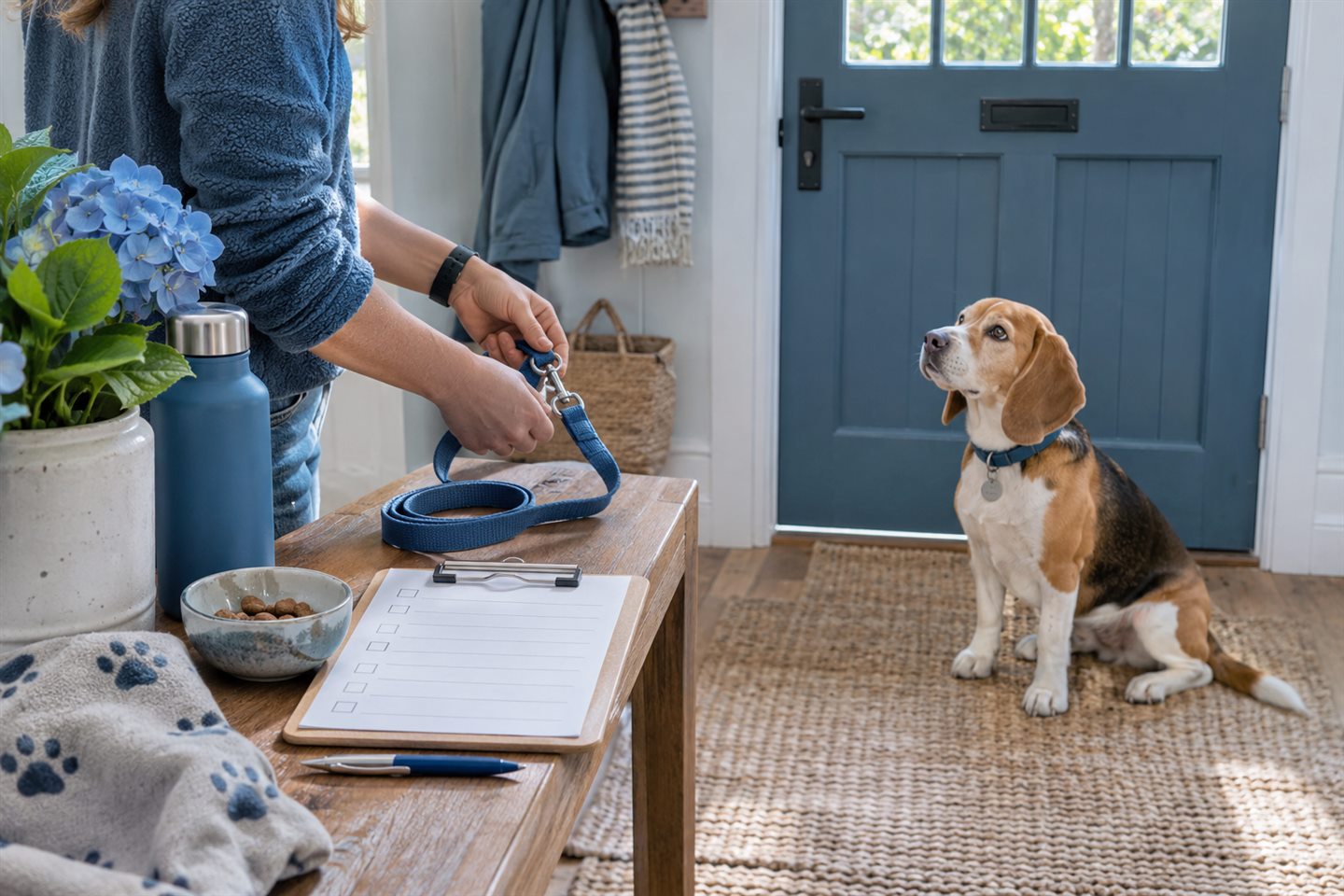
Set up the doorway before leaving. Put a washable mat where your dog enters and leave a towel within reach. Bring your dog inside calmly rather than turning drying into a chase. If they dislike being rubbed, begin with a gentle touch to an area they accept and reward cooperation. Do not force handling when the dog is distressed or appears sore.
Keep meals at roughly their usual times unless your veterinarian has recommended otherwise. A predictable framework leaves room for enrichment without making the entire day exciting. It also helps you notice a meaningful change, such as a dog refusing a familiar meal or being unusually reluctant to move.
Turn a little food into an easy search
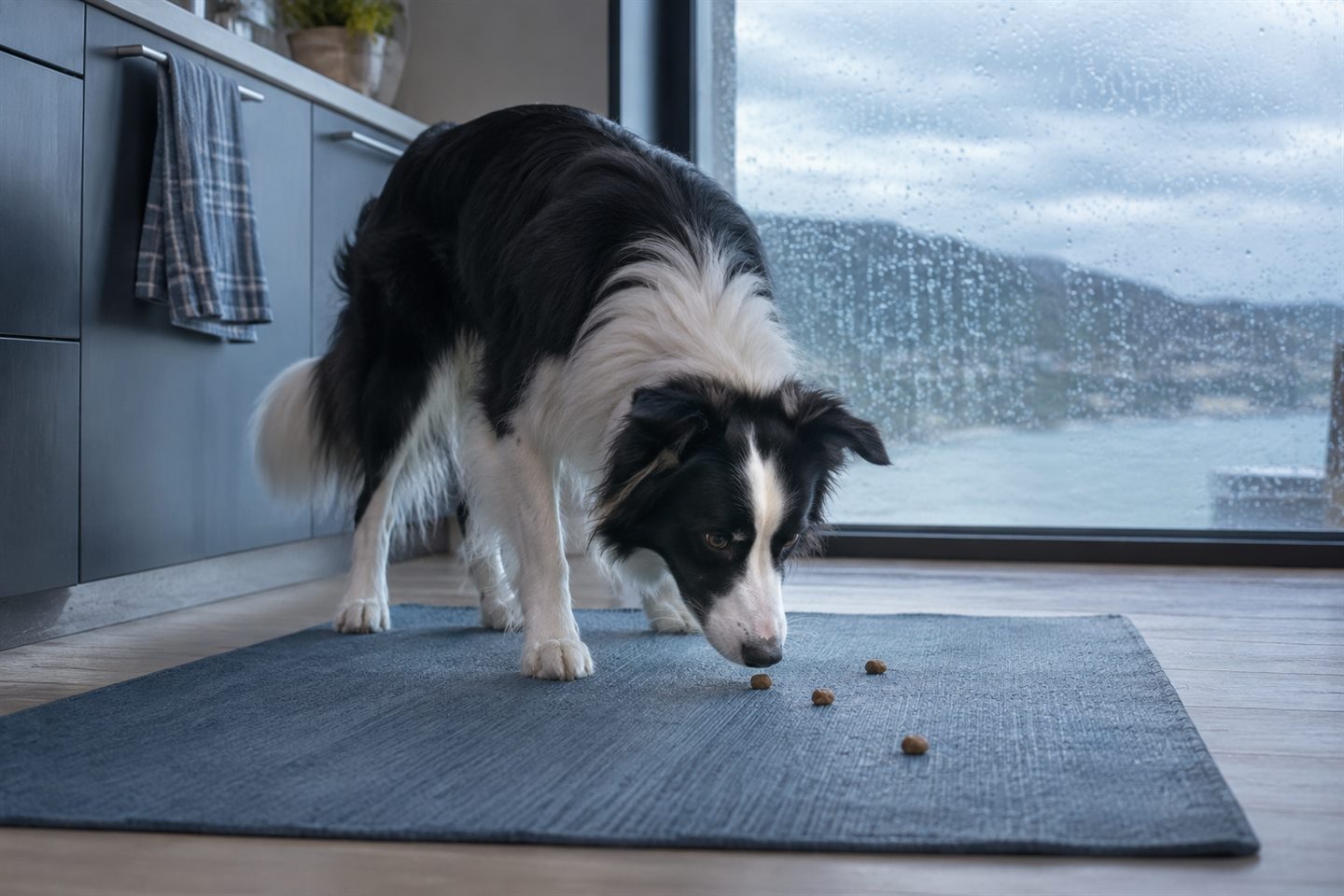
Set aside a small portion of your dog's normal food before the meal. In a clear area, place a few pieces where they are easy to see. Let your dog find them while you stay nearby. You are offering a straightforward activity, not testing how hard they will work when confused.
Once the first version is familiar, spread the pieces slightly further apart. You might use several open spaces on a non-slip floor. Keep the search away from furniture gaps, electrical cables, houseplants, and places the dog should not learn to investigate. If several animals live together, give each their own area to prevent competition over food.
Stop if your dog becomes frustrated, guards the area, or starts chewing the surface instead of searching. A puzzle does not become better simply because it is harder. Avoid towels, cardboard, or homemade containers for dogs who shred and swallow material. Their regular bowl remains a perfectly acceptable way to deliver the rest of the meal.
Rotate activities instead of stacking them
Choose two or three familiar options and leave space between them. A short search in the morning, a gentle toy game later, and a few minutes practising an easy cue may be enough to add variety. Filling every quiet moment can keep a dog waiting for the next event rather than learning that the house also contains downtime.
Put toys away when a session ends, especially those with strings, loose stuffing, or removable parts. Check seams and damaged surfaces before the next use. A toy that was suitable last month may no longer be safe after determined chewing. Select items according to the dog's size and play style rather than the picture on the packaging.
Notice what kind of activity your dog actually chooses. One may enjoy finding a familiar toy by name; another may prefer carrying a soft object around before settling. You can make room for those preferences without insisting that every dog complete the same game. Enrichment is useful when the animal can engage comfortably with it.
Use short training moments
A rainy afternoon can be a convenient time to practise something easy: approaching a mat, touching your open hand, or waiting while you put down an empty bowl. Work on a non-slip surface with enough space for the dog to move away. Keep rewards ready so you do not spend the session searching through a cupboard.
Choose one small behaviour and reward it consistently. If your dog already knows a hand target, ask for one or two repetitions, then pause. If they are learning, reward an interested look towards your hand before asking for contact. The activity should feel achievable. Repeating a cue louder rarely explains what the dog needs to do.
Finish before either of you becomes tired. Several calm minutes can be more useful than a long lesson interrupted by frustration. Do not withhold meals to make a reluctant dog participate. Sudden disinterest in food, play, or movement may be a health concern rather than a training problem.
Protect the resting part of the day
Look at the location of your dog's bed. Is it beside a washing machine, in a corridor, or directly under the children's play area? A rainy day often brings more people into the same rooms. Your dog may need a quieter resting option rather than another activity.
Provide a comfortable place away from foot traffic and allow the dog to leave social interaction. Teach children that a dog using that space should be left alone. If you use a crate, it should already be a comfortable, voluntarily entered resting area; a day of rain is not the moment to introduce confinement as punishment.
Consider sound and light as well as floor space. Loud television, doors banging, and people repeatedly approaching the bed can interrupt rest. You do not need a silent house, but you can avoid placing the dog in the centre of every task. Settle into a quiet activity yourself and let the room become uneventful.
Plan the evening before excitement builds
Late afternoon is a useful time to assess what the dog still needs. Have toilet breaks been adequate? Has the dog had comfortable social contact? Are they restless because they need something, or are they simply awake while you are busy? Those questions lead to better decisions than automatically starting a vigorous game.
If safe outdoor conditions return, take an appropriate walk without trying to compensate for the whole day at once. If they do not, keep the evening predictable. Offer another brief activity, make the final toilet trip, and return to the ordinary bedtime routine. Ask your veterinarian for guidance if weather regularly prevents your dog from meeting their exercise or toileting needs.
Keep a short list of the activities that worked, together with any safety adjustments. The next rainy day will be easier when you already know which toy survives supervision, which room offers enough space, and which search is simple enough for your dog. A good indoor day feels organised, varied, and restful, with no need to exhaust anyone.
Leave a plan for a busy workday
If you work from home, choose activities that fit between real commitments. Prepare the food portion and check the toy before your meeting starts. Offer the activity when you can supervise it, then put it away before returning to work. A puzzle that needs watching is not a substitute for supervision simply because your desk is nearby.
Write down a realistic order rather than a packed timetable. An early toilet break, breakfast, a quiet working period, and a brief midday activity may suit one household. Another needs help from a caregiver who can provide appropriate breaks. The routine must reflect the dog's actual needs and the time someone can genuinely provide.
Avoid saving all attention for the point when your dog begins pestering. Build comfortable contact into the day while also protecting uninterrupted rest. If your schedule cannot meet the animal's needs during a prolonged spell of bad weather, arrange suitable help. Planning around constraints is more useful than expecting an indoor game to solve every practical difficulty.
Further reading
RSPCA guidance on low-cost enrichment discusses choosing activities carefully and considering the safety of materials. Individual dogs need different levels of supervision.