Two bowls beside each other can look like a tidy feeding arrangement. From the animals' perspective, it may be a narrow space where someone can approach, steal, stare, or block the way out. Some pets eat comfortably together. Others finish quickly, hang back, or leave before they have eaten enough. Watching the whole meal often reveals more than checking whether the bowls are empty.
A calmer routine starts by making it clear which animal has access to which food. You do not need to make the household silent or teach everyone a complicated sequence. Separate spaces, prepared portions, and consistent handovers can reduce confusion. If there is aggression, distress, or a medical feeding requirement, ask your veterinarian and an appropriately qualified behaviour professional for an individual plan.
Watch without making a test of it
For a few ordinary meals, observe from a distance. Note who arrives first, who waits, and whether either animal keeps checking the other. Look at routes into and out of the feeding area. A pet who leaves food may be full, but may also be uncomfortable with the location. Avoid deciding the explanation from a single moment.
Do not bring bowls closer together to see whether the pets will learn to share. A meal is not a useful setting for testing tolerance. If an animal growls, freezes, guards, or tries to drive another away, create safe separation rather than correcting the warning. Keep children away from feeding animals and avoid reaching into a guarded bowl.
Write down practical observations for your veterinary team when needed. Include whether an animal eats normally when given a separate safe area. Appetite changes still deserve medical attention; a different feeding location should not be used to dismiss possible illness or pain.
Give each animal a protected place
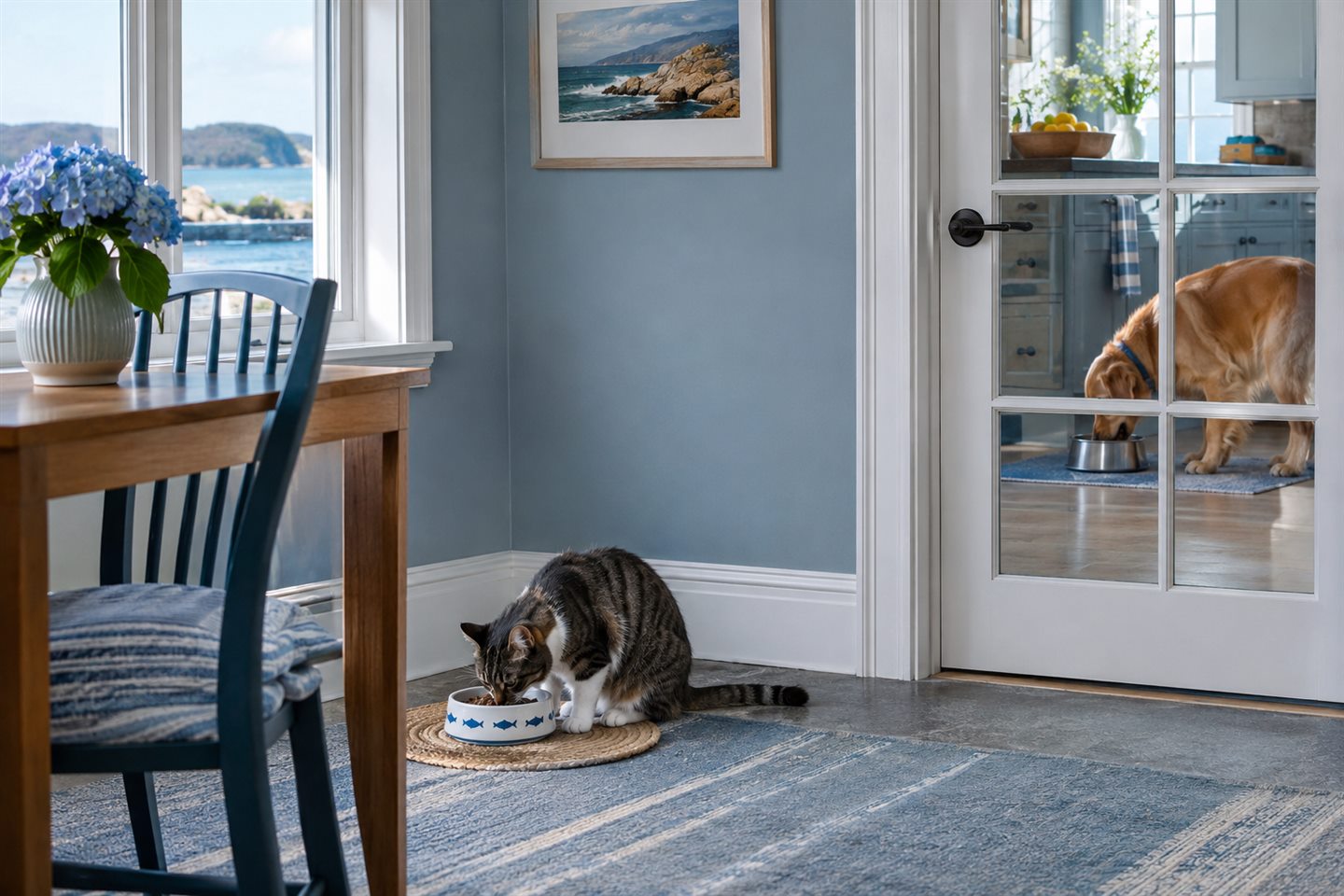
Choose feeding locations where each pet can eat without being approached by the other. Separate rooms with doors may be more reliable than bowls at opposite ends of a busy kitchen. Barriers must suit the animals involved; a low gate will not separate every dog or cat. Set up the space before bringing food out.
Consider access beyond the bowl. The animal should be able to enter comfortably, stand or sit on a stable surface, and leave when the meal is over. Avoid tight corners where another pet can wait at the only exit. If a cat uses an elevated location, it needs safe access and should not be chosen simply because a dog cannot reach it.
Keep water available in suitable places independently of the feeding session. Do not confine an animal without essential resources or leave them isolated for long periods to solve a brief mealtime problem. The arrangement should fit the household's care needs, not create another difficulty elsewhere in the day.
Prepare portions before inviting pets in
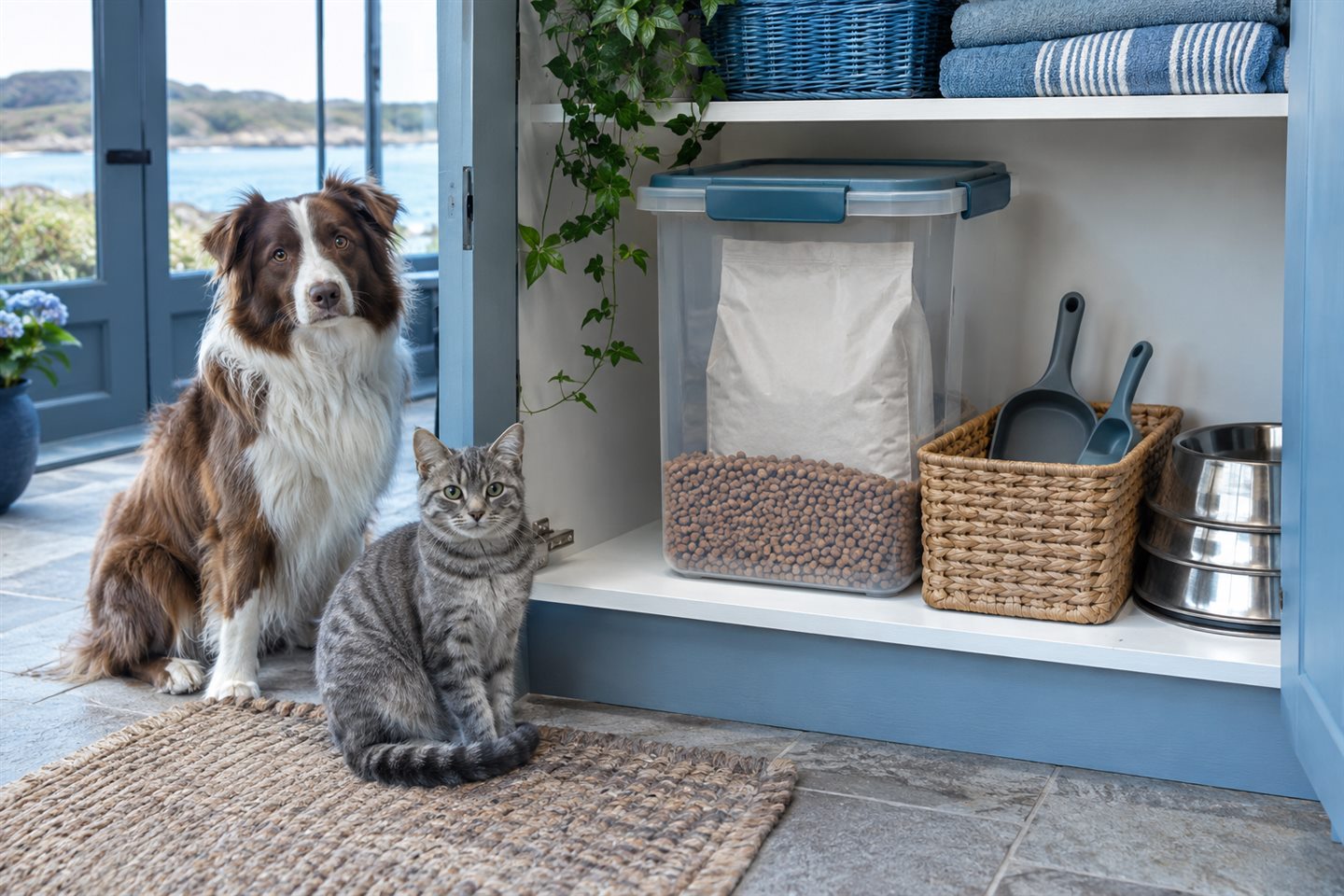
Put the right food into each bowl before opening access to the feeding spaces. This removes some of the excitement and makes mistakes less likely. Label bowls or storage areas if diets differ, especially when one animal has a veterinary diet. The label should identify the pet and the current instructions clearly.
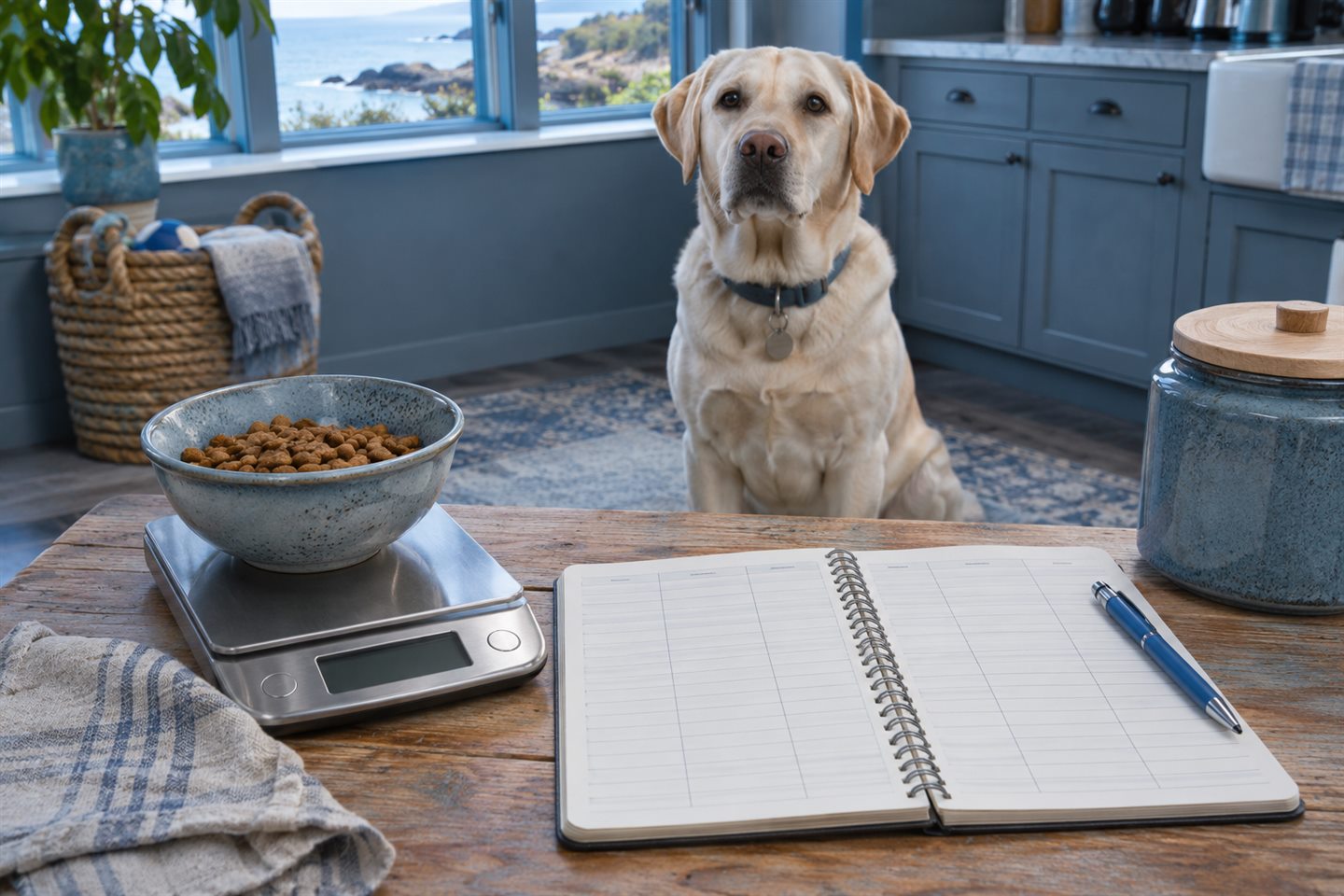
Use the measurement method agreed with your veterinarian or stated in the feeding plan. Keep the main food, extras, and medicines distinct. If medication must be given with food, follow the prescribing practice's directions and ensure the intended animal receives it. Contact the practice if you are uncertain whether a dose was eaten.
Ask all caregivers to use the same routine. A simple checklist can record meals offered and notable leftovers. It should be easy to mark immediately rather than completed from memory at bedtime. In a home with several animals, clarity often matters more than adding new equipment.
Manage the end of the meal
Some pets finish long before others. Give the slower eater time without allowing the first animal to inspect their bowl. Keep the barrier in place until you can safely manage the transition. Do not assume an empty bowl means a dog will lose interest in the cat's dinner.
Follow your established feeding plan about how long food remains available. Ask your veterinarian for advice when a pet grazes, has a medical condition, or requires a particular schedule. A routine designed for a healthy adult dog may not suit a kitten or an animal receiving treatment. Avoid imposing a generic deadline that ignores those needs.
Remove bowls when appropriate and clean the feeding area. Check what remains before washing up so you can identify meaningful changes. If leftovers are unusual, note the amount and any other symptoms. Persistent or sudden appetite changes warrant a veterinary call rather than repeated attempts to make the meal more exciting.
Treat enrichment as individual access
Food toys can create the same competition as bowls, sometimes over a longer period. Give each animal a suitable safe space and supervise use. An item that releases food slowly may be enjoyable for one pet and frustrating for another. Begin with an easy version and include its contents in the normal feeding plan.
Remove the toy when the session ends and inspect it for damage. Do not leave a shared collection of food-filled items scattered around if pets compete for access. Avoid materials that an animal chews apart or swallows. Equipment should be selected for the individual pet's size, habits, and health needs.
Training rewards also need a plan. If you work with one animal, manage the others so they are not crowding, stealing, or becoming distressed behind a barrier. Short individual sessions are often easier to organise than asking every pet to wait around a handful of food.
Review the routine when the household changes
A new pet, a new work schedule, or a visiting relative can disrupt a feeding system that previously worked. Recheck access and communication at those points. Leave written instructions for sitters, including which doors remain closed, where diets are stored, and whom to call about a missed meal.
Pay attention to ageing and mobility. A location that was convenient last year may now require a difficult jump or a slippery walk. Your veterinarian can help assess pain, body condition, and changes in appetite. Adjust the environment without interpreting hesitation as disobedience or a refusal to follow the routine.
The successful arrangement is usually easy to describe: each animal has comfortable access to the right food, enough time to eat, and a way to leave without confrontation. Once that is reliable, the household can spend less energy supervising every glance across the kitchen and more time noticing what each pet actually needs.
Plan for the moment a barrier opens
The transition after feeding deserves its own routine. Before opening a door, check that the other animal's meal has been managed as planned and that no food-filled toy remains on the floor. Allow each pet to leave into clear space. Avoid opening several barriers at once while carrying bowls and trying to direct excited animals.
Show a sitter the sequence during an ordinary meal. Point out which latch needs checking and where each animal usually waits. If the system relies on a person remembering an exception, write that exception where the food is prepared. Keep the instructions current when a diet or room arrangement changes.
Consider what happens if you are interrupted by a delivery or telephone call. Prepare meals when you can complete the necessary supervision, or pause the task safely before beginning. A robust system remains understandable on a busy day. The best arrangement often removes decisions from the moment when several animals and an occupied caregiver are sharing a small kitchen.
Further reading
International Cat Care's cat-friendly clinic guidance discusses why cats need control over space and access to resources. Your veterinary team can help adapt feeding arrangements to the animals and medical diets in your own home.