When someone asks what your pet eats, the answer can sound straightforward: one bowl in the morning and another at night. Then come the details. Which bowl? How full? What about training rewards, the dental chew, and the small piece of dinner that another family member offered? A feeding record makes those details visible without turning meals into an exhausting accounting exercise.
The purpose is to describe the current routine accurately. It is not to diagnose illness, calculate a restrictive diet yourself, or prove that one person in the household is doing everything correctly. A useful record gives your veterinarian a clearer starting point and helps several caregivers follow the same plan. Begin with a normal week, including the untidy days when schedules change.
Record the product, not just the flavour
Write down the full name of the main food, including the product range and life-stage wording. Photograph the front, nutritional information, feeding directions, and batch details on the original package. Products with similar names can have different formulations, so a note saying “chicken kibble” may leave out information your veterinary team needs.
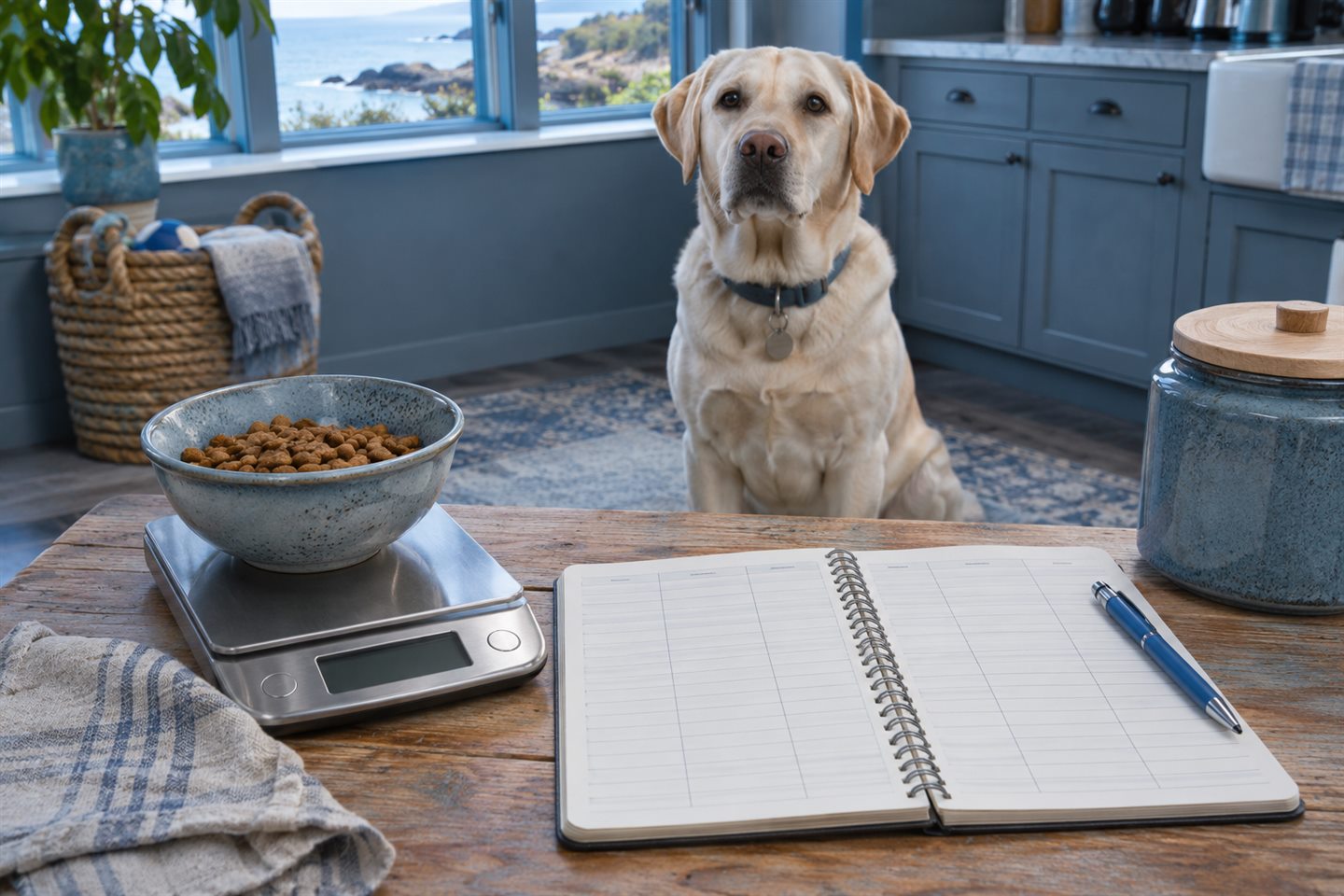
For wet food, include the pouch or tin size and how much is offered. For dry food, note whether you weigh the portion or use a scoop. If a scoop is used, identify the exact one and whether it is level or heaped. Do not assume two containers hold the same amount because both are called a cup.
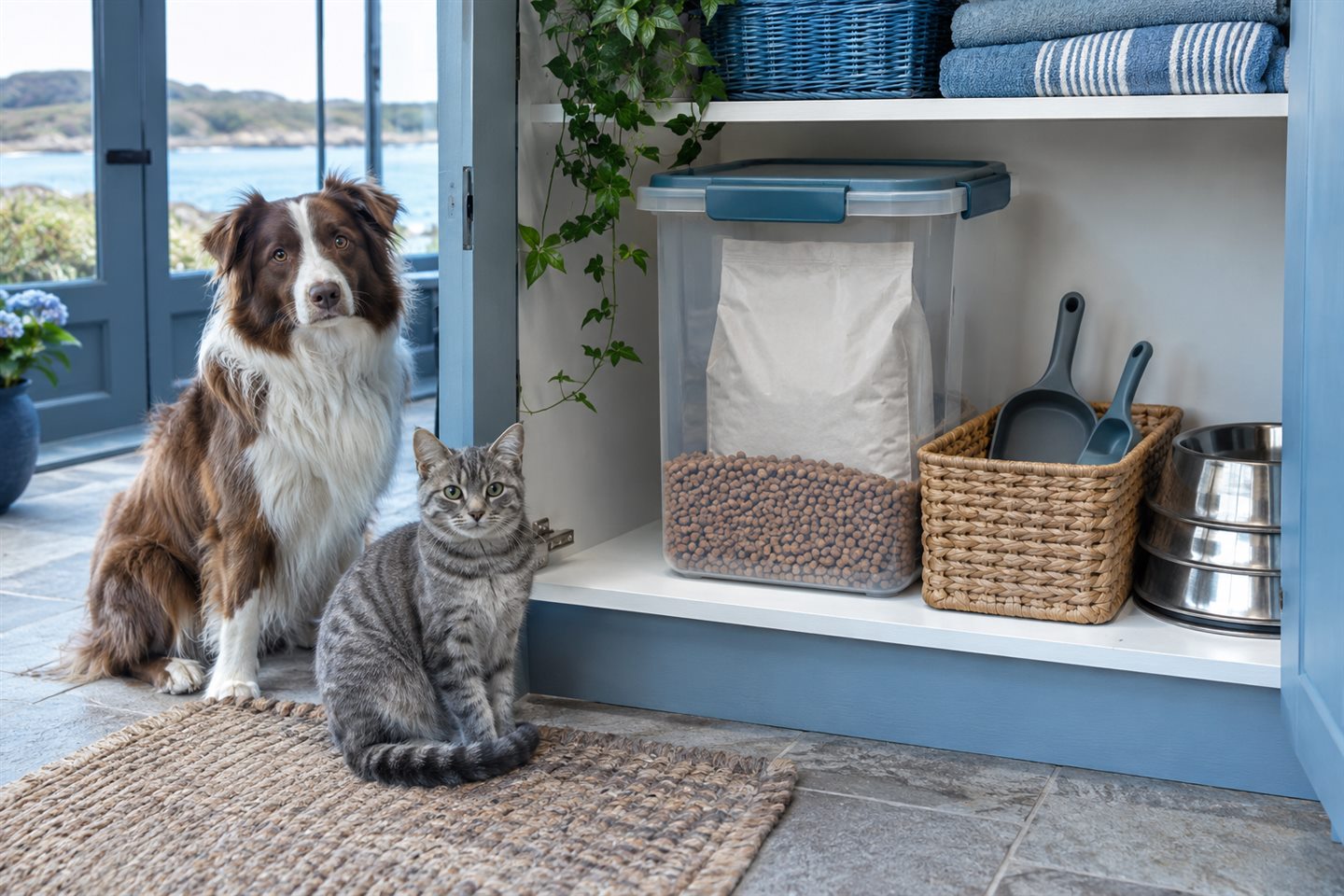
Keep the original packaging available while the food is in use. If you transfer it into a storage container, follow the manufacturer's guidance and preserve the identifying information. Your record is more useful when it can be linked back to a particular product rather than a photograph of an unlabelled storage tub.
Separate food offered from food eaten
Make two simple columns: offered and remaining. You do not need laboratory precision to notice that a pet regularly leaves part of breakfast. Record the portion in a consistent unit and describe leftovers honestly. “About a quarter remained” is clearer than automatically marking the full amount as eaten.
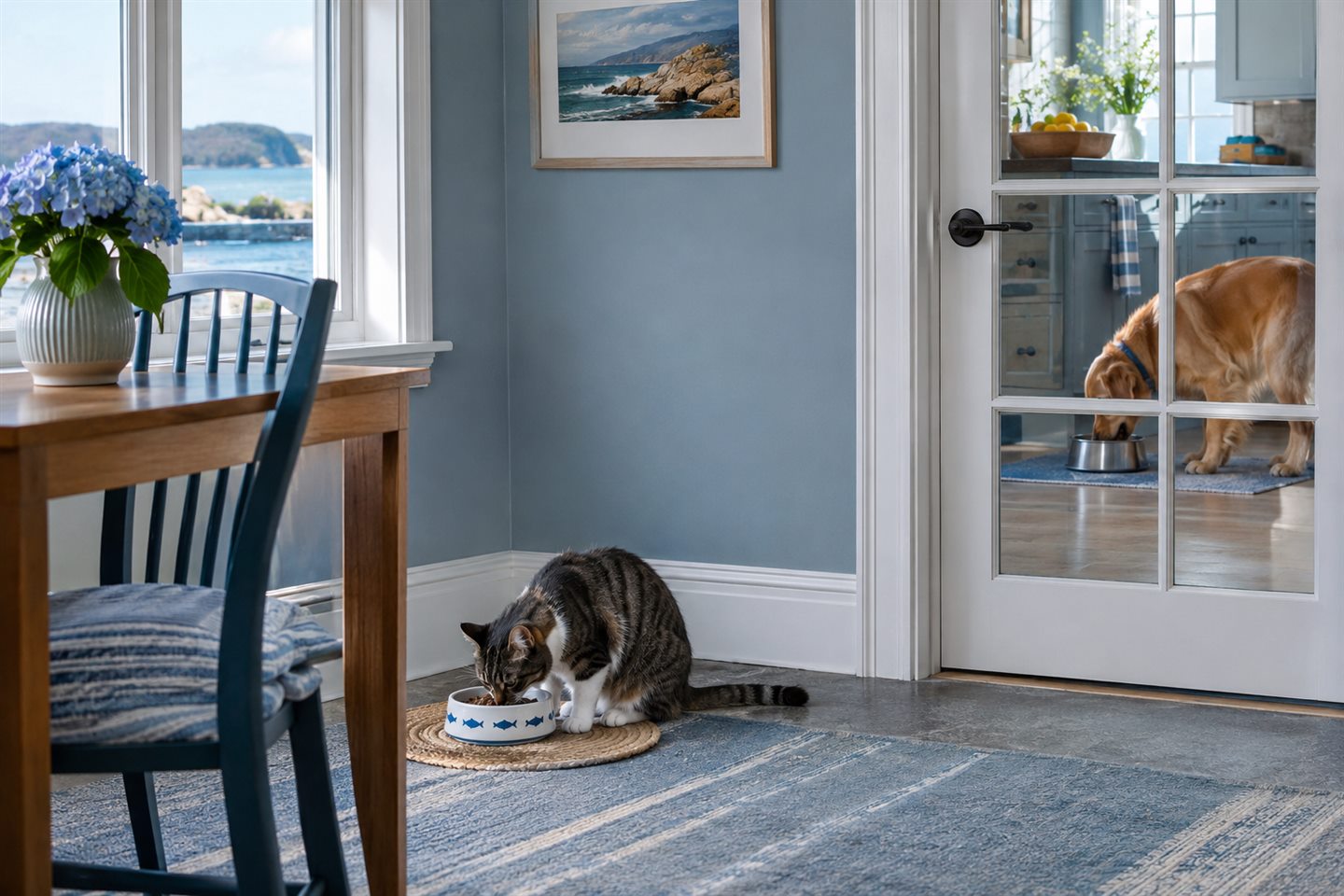
In a multi-pet home, note whether you can tell who ate what. If bowls are shared or left accessible to every animal, say so. Separate feeding areas may help your veterinary team assess intake, but discuss changes appropriately when pets have medical or behavioural needs. Avoid turning observation into competition around food.
Record unusual circumstances beside the meal. A delayed breakfast, a visitor feeding lunch, or food scattered during a game can explain an apparent change. The record should reflect real life. If it becomes so complicated that nobody completes it, simplify the form rather than filling gaps later from memory.
Include the small extras
Create a separate line for treats, chews, food used in training, supplements, and any human food offered. Write the brand or ingredients where known and estimate the amount. A photograph beside a familiar object can help describe the size of a chew when the packaging is no longer available.
Ask every caregiver to participate without blame. A note on the food cupboard or a shared phone document can prevent the record becoming one person's guess about everyone else. If visitors offer food, explain the household plan and any veterinary restrictions before they arrive. Clear communication is easier than reconstructing a busy weekend.
Treat foods are not automatically complete diets. AAFCO distinguishes treats and snacks from products intended to meet complete nutritional needs. Bring the whole list to your veterinarian rather than assuming that extras are too small to matter. Do not stop prescribed supplements or change a medical diet without the prescribing professional's guidance.
Add observations that help interpretation
Alongside meals, record appetite, obvious changes in drinking, vomiting, diarrhoea, and unusual toileting if these occur. Use plain descriptions and times. “Left most of dinner and vomited at 8 pm” is more useful than “stomach seems bad.” Do not attempt to identify a disease from the pattern yourself.
Note changes in routine such as boarding, travel, new food, or a new medicine. Your veterinarian can decide which details are relevant. The same applies to weight measurements: include the date, the scale used, and whether the pet was weighed under similar conditions. A single inconsistent measurement should not become the basis for a major feeding change.
A record is not a reason to wait when an animal is unwell. Contact a veterinarian promptly about appetite loss, repeated vomiting, marked thirst changes, pain, or other concerning symptoms. Kittens, puppies, animals with existing conditions, and pets on medicines may need especially individual advice about missed meals.
Use a format the household can maintain
A paper sheet on the fridge works if the people feeding the pet see it. A shared note works if everyone actually opens it. Choose the simplest format that captures the essentials: date, food, amount, leftovers, extras, and observations. Leave enough space for a short comment without inviting a diary entry for every meal.
Assign responsibility clearly. If two people might feed breakfast, mark it as completed as soon as the food is offered. This helps prevent double feeding and uncertainty. Keep medicine records separate and follow the veterinarian's directions; a food checklist should never become an improvised medication chart.
Review the first two days for missing information. Perhaps the scoop is not identified, or the person giving evening treats did not know they should add them. Fix the form early. The goal is a reliable snapshot, not a perfect spreadsheet created after the week has ended.
Bring useful questions to the appointment
Share the record with your veterinary team in the format they prefer. Ask whether the main food suits your pet's life stage, health, and current body condition. Discuss the amount, the contribution of extras, and any practical difficulties in following the routine. Bring packaging photographs so the conversation does not depend on brand names remembered approximately.
Ask how to monitor any recommended change and when to review it. Clarify what should prompt a call sooner. If several people feed the pet, write down the agreed plan in one place and retire outdated instructions. A clear current version prevents one caregiver following last year's advice while another uses the new plan.
You may not need to keep a detailed record forever. Once the routine is clear, a simpler checklist may be enough until something changes. The value lies in making a complicated daily pattern understandable, so decisions about feeding can be based on the individual animal and an accurate account of what reaches their bowl.
Keep the record descriptive after a recommendation
If your veterinarian changes the feeding plan, mark the start date and write the new instructions clearly. Continue observing without immediately attributing every difference to the food. Changes in routine, activity, medication, or environment may happen at the same time. Your veterinary team can help interpret what matters.
Use the same measurement method so comparisons remain meaningful. If you switch from a scoop to weighing, note that change rather than treating the figures as directly equivalent. Record whether the pet had access to another animal's bowl or received an extra reward that day. Those details explain uncertainty instead of hiding it.
Keep questions in a separate short list for the follow-up. You might ask about a practical serving problem, a recurring leftover pattern, or how to include a training reward. Contact the practice sooner if concerning symptoms appear. The record should make communication easier; it should never become a requirement to collect another week's information before seeking help.
Further reading
AAFCO's explanation of treats and chews explains why treats should be distinguished from complete foods. The feeding record described here is an organisational tool for discussing an individual pet's diet with a veterinarian.