The food cupboard rarely gets much attention until a bag spills, a lid stops closing, or nobody remembers when a tin was opened. Yet storage is part of feeding. A clear routine helps preserve product information, reduces mix-ups, and makes it easier for everyone in the household to know what should happen next.
You do not need matching containers or a dedicated utility room. You need the original instructions, a suitable storage location, clean equipment, and a way to identify opened products. Start with the food already in use and work outward. Because products differ, the manufacturer's directions and your veterinarian's advice for an individual diet take priority over a general rule found online.
Keep the package information accessible
Before discarding any outer packaging, check what information would be lost. Product name, lot or batch number, best-before date, and feeding directions can all matter. If a problem occurs or a manufacturer issues a recall, an unlabelled container makes identification harder. Preserve that information for as long as the food is being used.
Read the storage directions each time you change products. A familiar brand can sell foods with different requirements. Dry, wet, refrigerated, and frozen products should not be treated as interchangeable. Avoid relying on a household habit simply because it worked for a previous food.
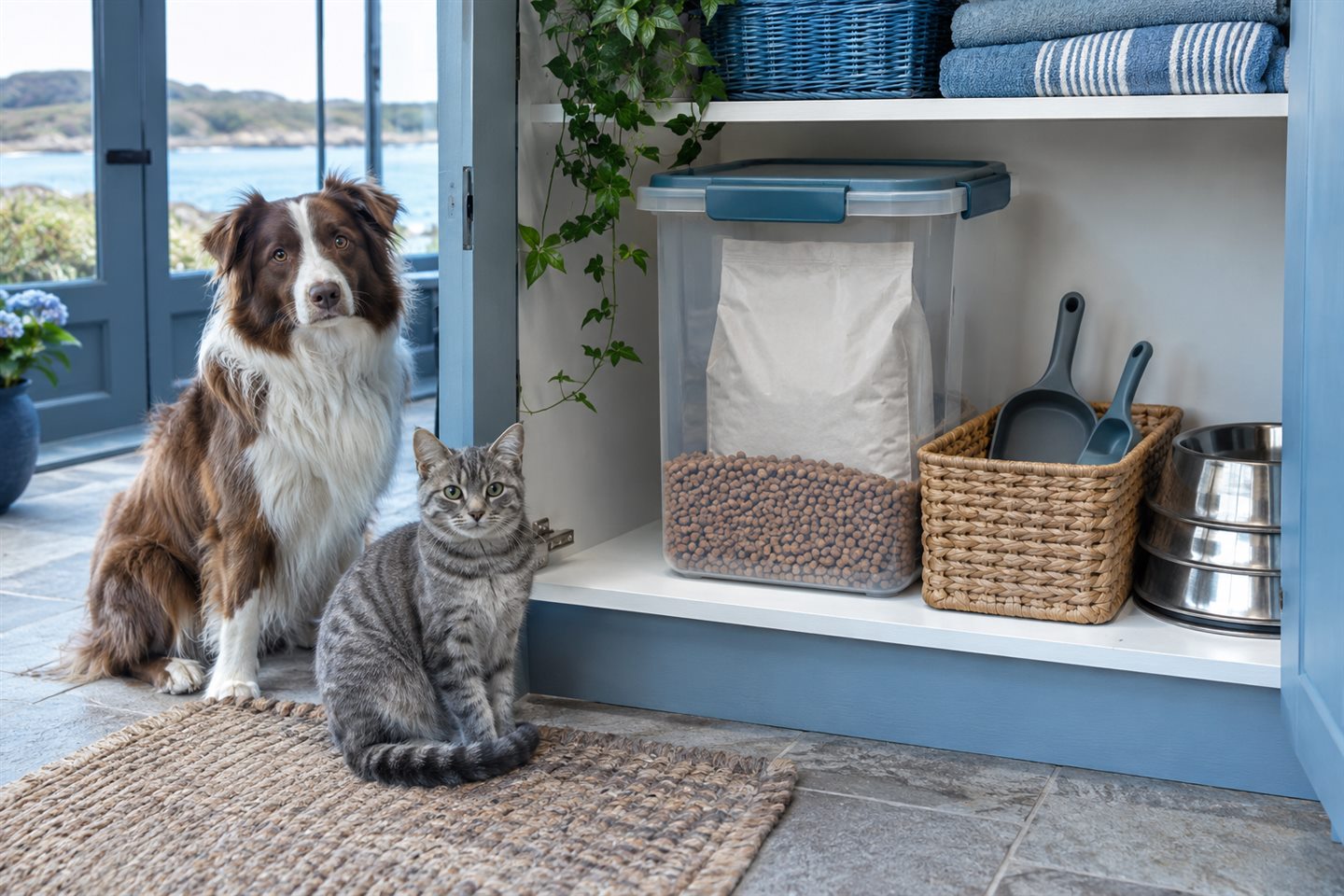
If you use a storage bin, follow the manufacturer's guidance about whether food should remain inside its original bag. Choose a clean, food-appropriate container with an intact lid. Keep labels visible and do not combine old and new batches without a clear system for identification and cleaning.
Choose a location that stays suitable
Look for a place that meets the product's directions and remains away from pets, pests, moisture, and household chemicals. A space beside a hot appliance or under a leaking sink may be convenient but unsuitable. Check conditions through the day rather than judging the cupboard only when the room feels cool.
Close bags and containers after each use. An inquisitive animal should not be able to push a lid aside or reach packaging that can be chewed or become trapped around the head. Store spare bags securely too. The fact that a package is unopened does not make it inaccessible to a determined pet.
Keep cleaning products separate from food and feeding utensils. If the cupboard is shared, arrange it so a spilled bottle cannot contaminate a bag or bowl. Avoid strongly scented products near food, and follow any cleaning and rinsing instructions for containers. A pleasant smell to a person is not evidence that a storage area is appropriate.
Mark opened wet food clearly
When you open a tin, tray, or pouch, check the instructions for refrigeration and the permitted time after opening. Use a clean suitable cover or container as directed, and mark when it was opened. A small removable label is often easier to maintain than relying on one person's memory.
Keep pet food separate from ready-to-eat human food where practical, and handle it with clean hands and utensils. Do not put a used bowl or a spoon that has been licked back into stored food. If you are unsure how long an opened product has been kept or whether storage conditions were suitable, contact the manufacturer for advice rather than guessing from smell alone.
Serve and handle food according to the product's instructions. Avoid repeatedly warming and cooling an entire opened container to prepare one portion. Ask your veterinarian about appropriate handling if your pet's diet has special requirements. Never assume that every refrigerated food follows the same timetable.
Make bowl cleaning easy to complete
Choose bowls that can be cleaned thoroughly according to their care instructions. Check for cracks, deep scratches, damaged coatings, and areas that trap residue. Retire equipment that cannot be maintained safely. A decorative dish is less useful if it has seams or damaged surfaces that are difficult to inspect.
Clean food bowls after use and refresh drinking water regularly, cleaning the water container as well. Follow the bowl manufacturer's guidance for washing, rinsing, and dishwasher use. Let equipment dry appropriately before storage. Keep a second suitable bowl available so cleaning does not mean leaving an animal without access to water.
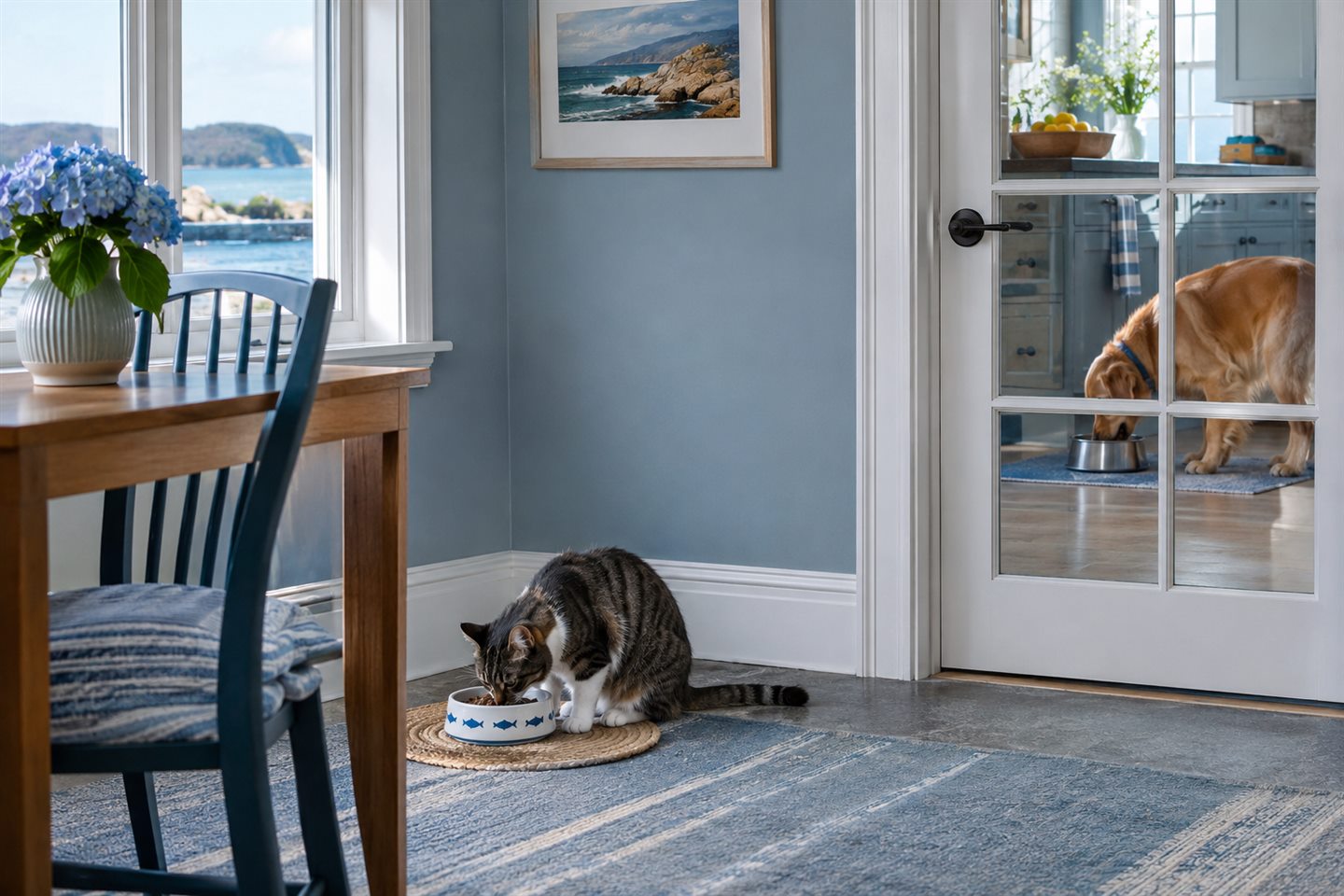
If several pets use different diets, keep the utensils and bowls clearly identified. Wash your hands after handling food and cleaning feeding equipment. Households with young children, vulnerable people, or pets with special health needs should ask their veterinary team about any additional precautions appropriate to their situation.
Organise stock without buying too far ahead
Arrange unopened food so the products that should be used first are easy to reach. Check dates before opening a new package, and inspect it for damage. Avoid buying quantities that exceed what your household can store appropriately or use within the product's guidance. A bulk discount is not helpful when storage becomes unreliable.
Keep a short inventory if several people shop for supplies. A note showing the product name and amount remaining can prevent accidental substitutions. If your pet eats a veterinary diet, ask the practice what to do about supply problems before running out. Do not improvise a replacement for a medically necessary food based only on similar packaging.
Store treats and supplements with the same attention to instructions and identification. Keep medicines in their prescribed storage conditions, clearly separate from ordinary rewards. A sitter should be able to tell which items are food and which require specific veterinary directions without opening every container.
Build a brief weekly check
Choose a regular moment, perhaps when writing the shopping list, to inspect the feeding area. Check opened labels, remaining stock, cupboard conditions, and the state of bowls and scoops. Wipe up crumbs and investigate moisture or pest signs promptly. Small corrections are easier than emptying an entire cupboard after a neglected spill.
Record any product concerns with identifying details and contact the manufacturer or veterinary team as appropriate. If your pet becomes unwell, seek veterinary advice and retain relevant packaging. Do not keep serving a suspect product while waiting to see whether the next portion causes the same problem.
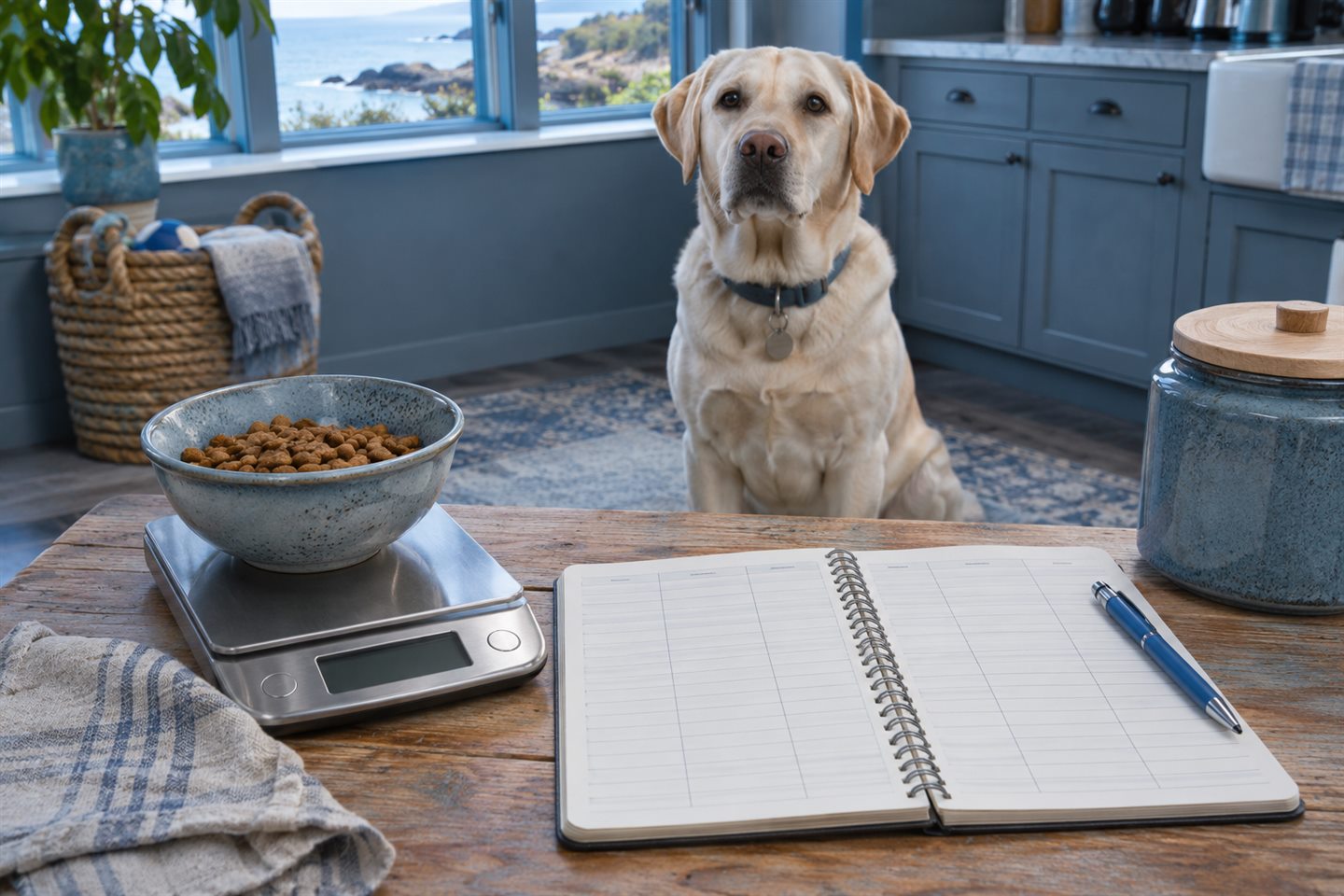
The routine should be simple enough that another caregiver can follow it: open the right package, measure the planned portion, close and store it correctly, and clean what was used. Once those steps are visible and repeatable, the food cupboard becomes a dependable part of care instead of a collection of containers nobody can confidently identify.
Make the feeding station understandable to a sitter
Leave a short note with the exact product, portion, storage location, and handling directions. Label opened food with the date and the pet's name when diets differ. Show the sitter where clean bowls are kept and where used utensils belong. Do not assume a person can identify a veterinary diet by the colour of its bag.
Prepare for an unexpected extension to the care arrangement without stockpiling beyond suitable storage conditions. Explain whom to contact if food runs low and whether a particular product must come from the veterinary practice. A photograph of the correct package can prevent a purchase based on an approximate name.
Keep the system consistent after you return. If you change the container, measurement method, or product, update the note at the same time. Old instructions are easy to follow accidentally when they remain pinned to a cupboard. A clear current version supports safer handling and makes it easier for every caregiver to report concerns using the same product information.
After shopping, check that the delivered product matches the label in your current feeding plan before opening it. Similar packaging can hide a different life stage or formulation. Put any uncertain substitution aside and confirm it with the manufacturer or veterinary team first.
Further reading
The US FDA's pet food safety guidance provides background on handling and storage. Always follow the directions for the specific food, including instructions that differ from a general household routine.