A medicine label can be perfectly clear while the household routine around it remains uncertain. One person gives the morning dose, another checks the bowl, and a third asks whether it has already happened. A simple record helps people communicate what was done, when it happened, and which questions need to go back to the veterinary practice.
This guide concerns organisation around medicine prescribed for an individual pet. It does not recommend a drug, dose, treatment, or change to a schedule. Follow the prescribing veterinarian's directions and the product's storage instructions. If you are unsure whether a dose was given, missed, vomited, or eaten by another animal, contact the prescribing practice promptly rather than guessing what to do next.
Start with the current prescription
Use the original labelled packaging and the latest written instructions from the veterinarian. Check that the pet's name, medicine, directions, and relevant dates are clear. If two documents appear inconsistent, ask the practice to resolve the discrepancy. Do not choose whichever instruction seems easiest to fit around your day.
Keep outdated directions separate from the active plan, while preserving records the practice asks you to retain. A note from a previous course may refer to a different strength, schedule, or animal. Similar packaging is not evidence that two products can be substituted. Ask before making any change.
Request clarification about administration, food requirements, storage, and the action to take if something goes wrong. Write the answers in the practice's terms, without adding advice from forums or another pet's experience. A clear starting plan prevents the household record becoming a collection of competing suggestions.
Give each medicine a distinct place in the record
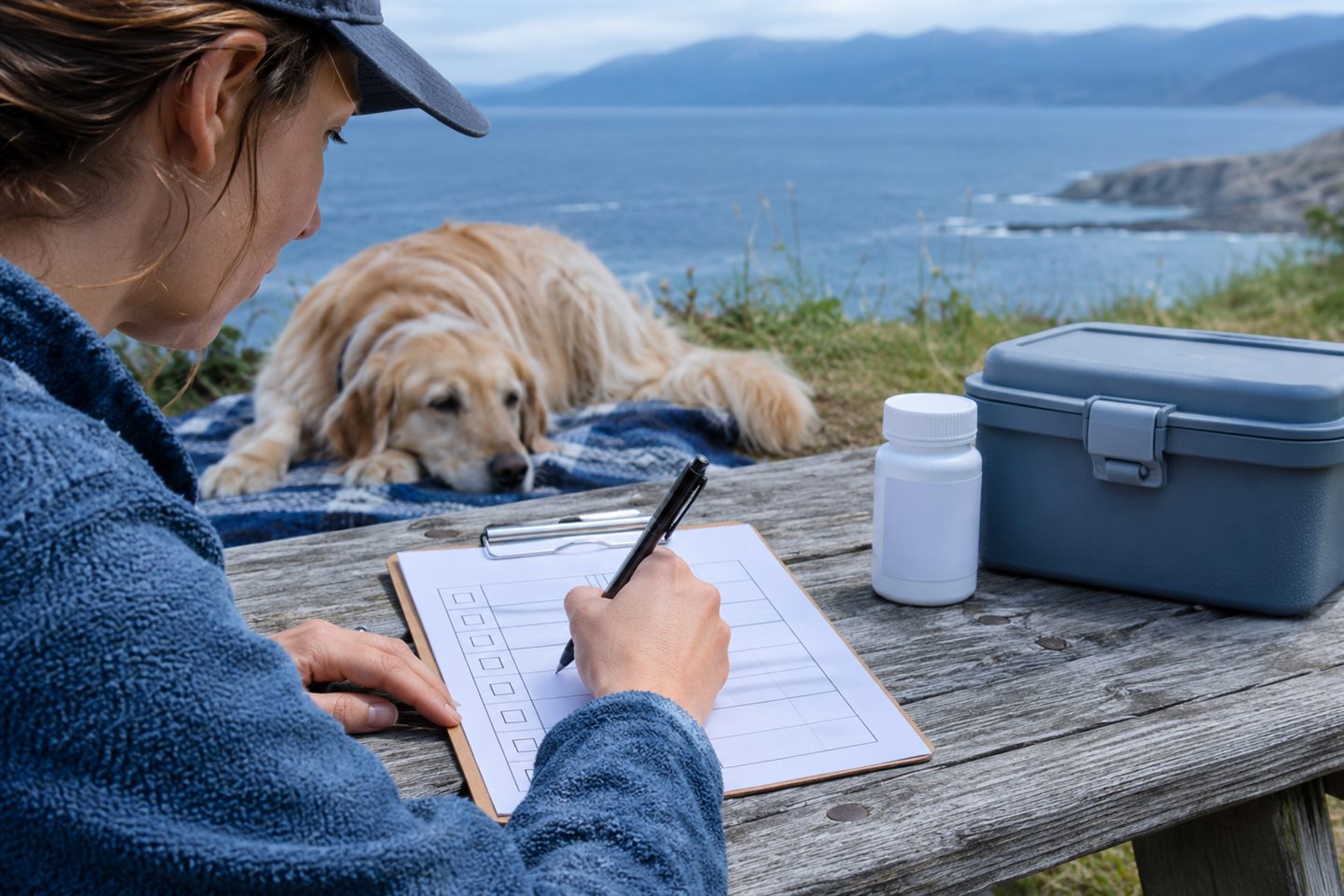
Use a separate line for each prescribed product and identify the animal clearly. Include the prescribed timing exactly as directed, with space to record completion and the caregiver's initials. Do not use a generic box marked “medicine done” if several products follow different schedules.
Record what actually happened immediately after administration. If there was a difficulty, describe it rather than marking the dose complete automatically. A note that the pet spat out a tablet is information for the prescribing team, not a prompt to give an additional one without advice.
Keep the record where responsible caregivers can access it, while protecting it from children, visitors, and animals. A paper sheet works if everyone uses it; a shared digital note works if it is reliably updated. Avoid maintaining two active records that can disagree about the same dose.
Agree who is responsible before the scheduled time
Assign the task explicitly. If the usual person is away, hand it over rather than assuming someone will notice the clock. A brief confirmation can prevent both missed administration and accidental duplication. The person completing the task should be comfortable with the method the veterinarian has demonstrated.
If administration is difficult, contact the practice for advice. Do not force a technique that risks injury, crushing, choking, or distress. Ask whether another formulation or professional demonstration is appropriate. Never alter a tablet, open a capsule, or mix medicine into something different unless the prescribing professional confirms it is suitable.
For several pets, arrange administration so the correct animal receives the product and others cannot access it. Follow the practice's directions about food and monitoring. Do not leave a medicated bowl unattended where another animal might eat from it, and report uncertainty promptly rather than recording an assumed success.
Store products as directed
Read the label and any accompanying storage instructions. Some products have special requirements after opening or preparation. Keep them in the original packaging unless the practice specifically advises another system. Preserve expiry information and any dates that need to be recorded after opening.
Store medicines securely away from pets, children, food confusion, and unsuitable environmental conditions. A high shelf may not be inaccessible to a climbing cat, and a loose lid may not deter a dog. Ask a pharmacist or veterinary practice about safe storage when the label leaves you uncertain.
Do not share medicines between animals or use leftover products for a new problem. Human medicines and veterinary medicines for a different pet can be dangerous. Ask the practice how to return or dispose of unused products appropriately. Do not put them into a food container or leave them beside treats because it seems convenient.
Record observations without deciding the cause
Follow any monitoring instructions the veterinarian has provided. Write observable changes with a time, such as appetite, vomiting, unusual sleepiness, or difficulty with administration. The veterinary team can decide whether the pattern relates to treatment, the underlying condition, or something else.
Do not wait to complete the record before seeking help for an urgent reaction or other emergency. Call a veterinarian promptly if the pet is seriously unwell, you suspect an overdose, or the wrong animal may have received a product. Keep the packaging available so the professional can identify the medicine accurately.
Avoid changing or stopping treatment independently because of an observation, unless the prescriber has already given a specific instruction for that situation. Contact the practice for an individual decision. The purpose of the log is to support that conversation, not to replace clinical judgement with a household interpretation.
Make follow-up and handover explicit
Record the next review date and any instructions about contacting the practice before supplies run low. Check availability in time to avoid a last-minute gap. If the treatment plan changes, update the active record at once and confirm that every caregiver has seen the revision.
When a sitter takes over, demonstrate the authorised method and let them explain the plan back to you. Confirm they are willing and able to provide the required care. Some treatments need trained assistance, a veterinary service, or a different care arrangement. A printed instruction cannot make an unsuitable setup safe.
Leave the prescribing practice's contact details and the agreed out-of-hours service information at the top of the record. Clarify emergency authority and payment arrangements as needed. A caregiver should not have to search through old messages while deciding whom to call about a missed dose or a pet who has become unwell.
Make the current version obvious
Put a revision date on the active sheet and name the person who confirmed the instructions with the practice. If a change arrives by telephone, write it down and repeat it back before updating the shared record. Ask for written confirmation when needed.
Tell every caregiver that the previous version has been replaced. A screenshot saved on one phone can otherwise continue circulating after the main document changes. The current plan should be easy to recognise without comparing several messages. This small administrative step matters most in busy households where people are helping at different times and may never be present together.
Review the system after the course or appointment
Ask the practice which records should be kept and for how long. Mark the course or plan as completed only when this matches the veterinarian's directions. Remove obsolete instructions from the active feeding or care area so they cannot be followed accidentally during a later illness.
Look at any confusion that occurred. Perhaps initials were missing, the schedule was written ambiguously, or two people used different records. Adjust the organisation for the next prescribed plan without changing the clinical instructions. The best system makes an ordinary task easy to communicate and an unexpected problem quick to escalate.
A reliable medicine record is deliberately modest. It identifies the right pet and product, records the action accurately, and points questions back to the prescribing professional. That clarity supports continuity of care while keeping decisions about treatment where they belong: with the veterinarian responsible for the individual animal.
Further reading
FDA questions to ask about prescribed pet medicines provides background for discussing individual care with the veterinary team. Follow your own prescribing or treating veterinarian’s directions.